The quick version
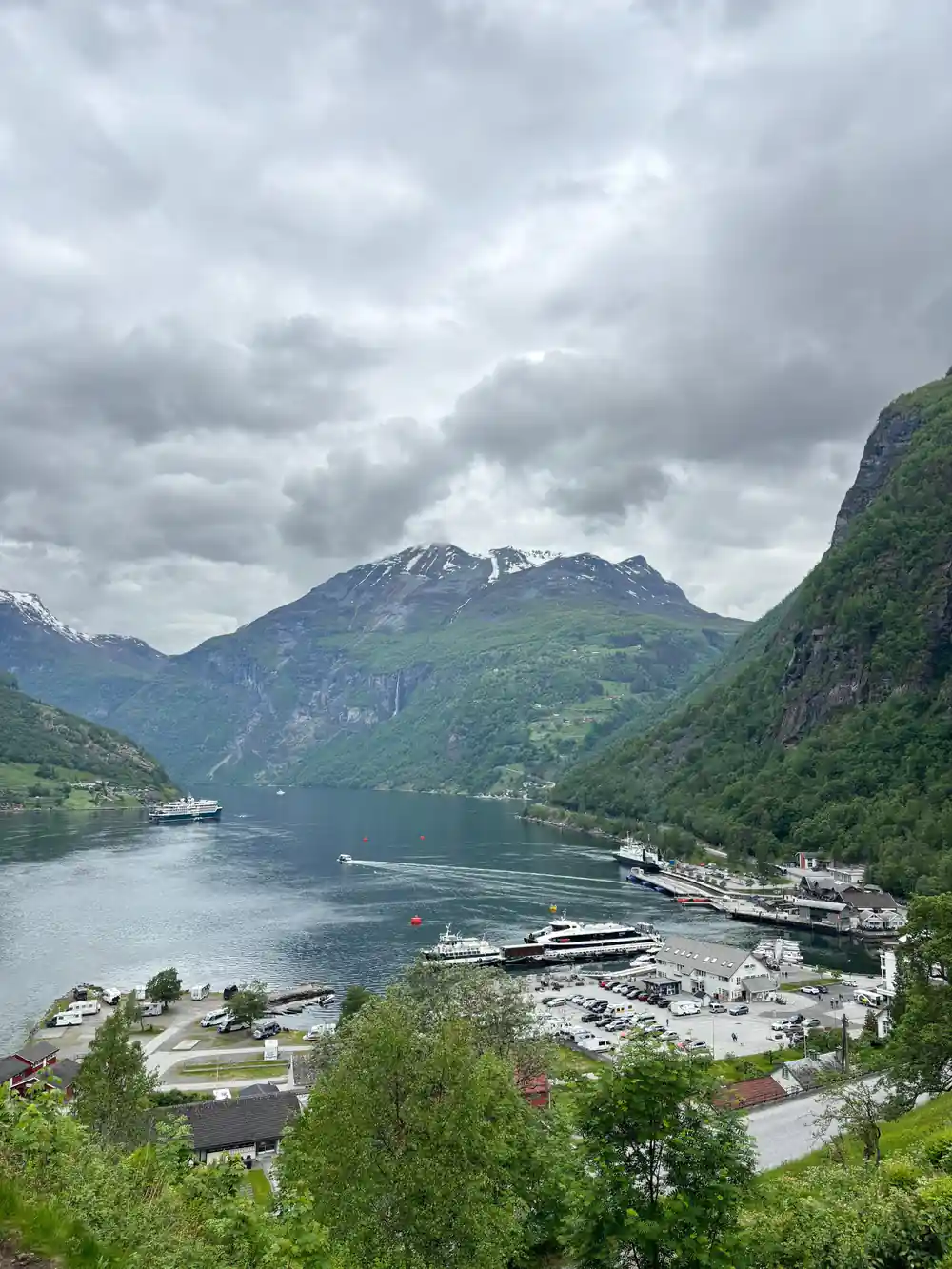
- Geiranger's waterfront is compact, with the village, the fjord and the valley behind it all close to where you step off.
- The round trip from Ålesund on the hybrid electric boat takes 8.5 - 9.5 hours, while the boat-and-bus version takes 10.5 hours.[1][2]
- The round trip starts from US$202, with free cancellation up to 24 hours in advance and an audio guide on board.[1]
- The Seven Sisters waterfall is 410 meters tall in total, and the highest of its seven streams has a free fall of 250 meters.[3]
- Geirangerfjord is part of the West Norwegian Fjords, inscribed on the World Heritage List in 2005.[4]
- Top choice Geirangerfjord Round Trip from US$202 Duration8.5 - 9.5 hours[1]Rating4.75 from 758 reviews[1]Guide or audioAudio guide included[1]CancellationCancel up to 24 hours ahead[1] Check availability
- Boat Out, Bus Back from US$210 Duration10.5 hours[2]Rating4.60 from 140 reviews[2]Guide or audioHost or greeter: English[2]CancellationCancel up to 24 hours ahead[2] See this tour
- Winter Fjord Cruise from US$325 Duration9 hours[5]Rating4.76 from 105 reviews[5]Guide or audioAudio guide and live guide[5]CancellationCancel up to 24 hours ahead[5] See this tour
Ticket prices Adult NOK 275 Children 3-15 years NOK 135 Children 0-2 years NOK 0
Is the round trip boat the right way to spend your Geiranger day?
Worth knowing first
Ashore in Geiranger
- Layers, a rain shell and sunglasses for the deck and the village
- Village cafés fill up when a ship is in, so eat early or eat late
- Keep the last half hour free for the walk back to the boat
- Tell the crew your plans if you are heading up to the waterfalls
How long do you actually get in Geiranger?
Almost everyone who asks how long in Geiranger they will get is really asking how the day is shaped. From Ålesund the village sits 67 miles (108 km) away by road, so driving both ways eats a large part of the day.[6] Coming by water is the relaxed version: the hybrid electric round trip from Ålesund runs 8.5 - 9.5 hours and passes through Storfjorden, Sunnylvsfjorden and Geirangerfjord in both directions, with Seven Sisters, Friaren and Geiranger among its stops.[1]
If you would rather mix sea and road, the boat out with a return bus takes 10.5 hours and calls at Ørnesvingen on the way back.[2] One-way pieces exist as well. The silent one-way electric cruise from Ålesund takes 3 hours,[7] which leaves the afternoon free in Geiranger, but the way back is then your own to arrange, so book it before you sail.
What none of them can change is the clock. Your free time ashore is carved out of a fixed timetable, so decide before you land on the one thing you most want to do, and let the rest of the day fill in around it. A short list beats a long one here, every time.
Walking the village core and the waterfront
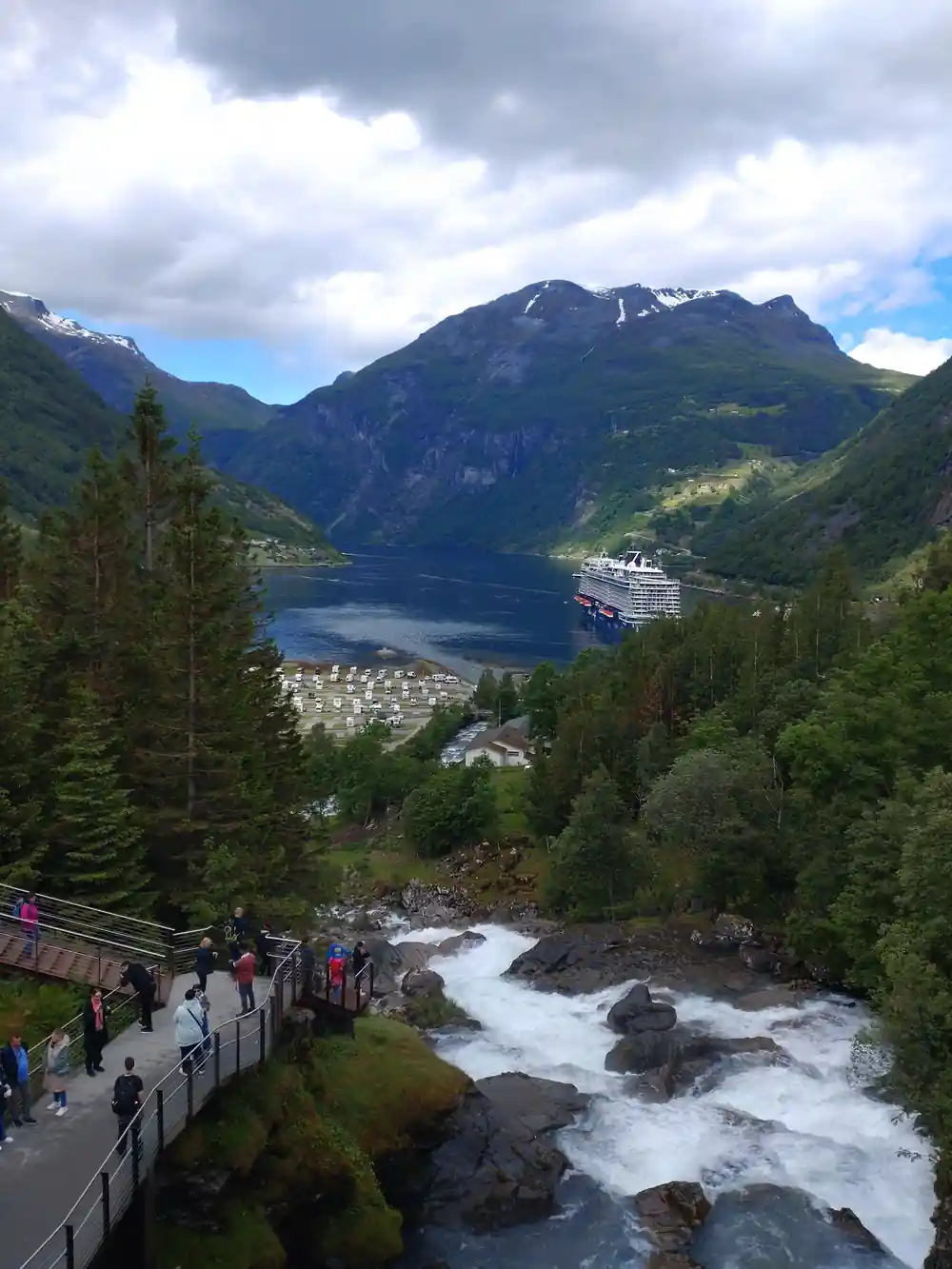
Geiranger is a small place, and that is most of its charm. The village sits at the head of the fjord with the water in front, the river running down through the middle and steep green slopes closing in on both sides. Step ashore and you are already in it: a short waterfront, a handful of cafés and shops, a campsite and a few hotels, and roads that climb away from the water on either side.
The obvious first walk is the waterfront itself and the little bridge over the river, where you can look straight up the fjord at the ships and the mountains. From there the village road runs inland towards the church, which sits above the village on the slope, and past the fjord centre near the water, where you can spend time indoors if the weather turns.
Go slowly. The pleasure of a stop here is standing somewhere small and looking up at rock faces that come straight out of the water, with waterfalls threading down them. Allow more time than you think you need for the simple loop of waterfront, river bridge and village lanes, because you will keep stopping to look.
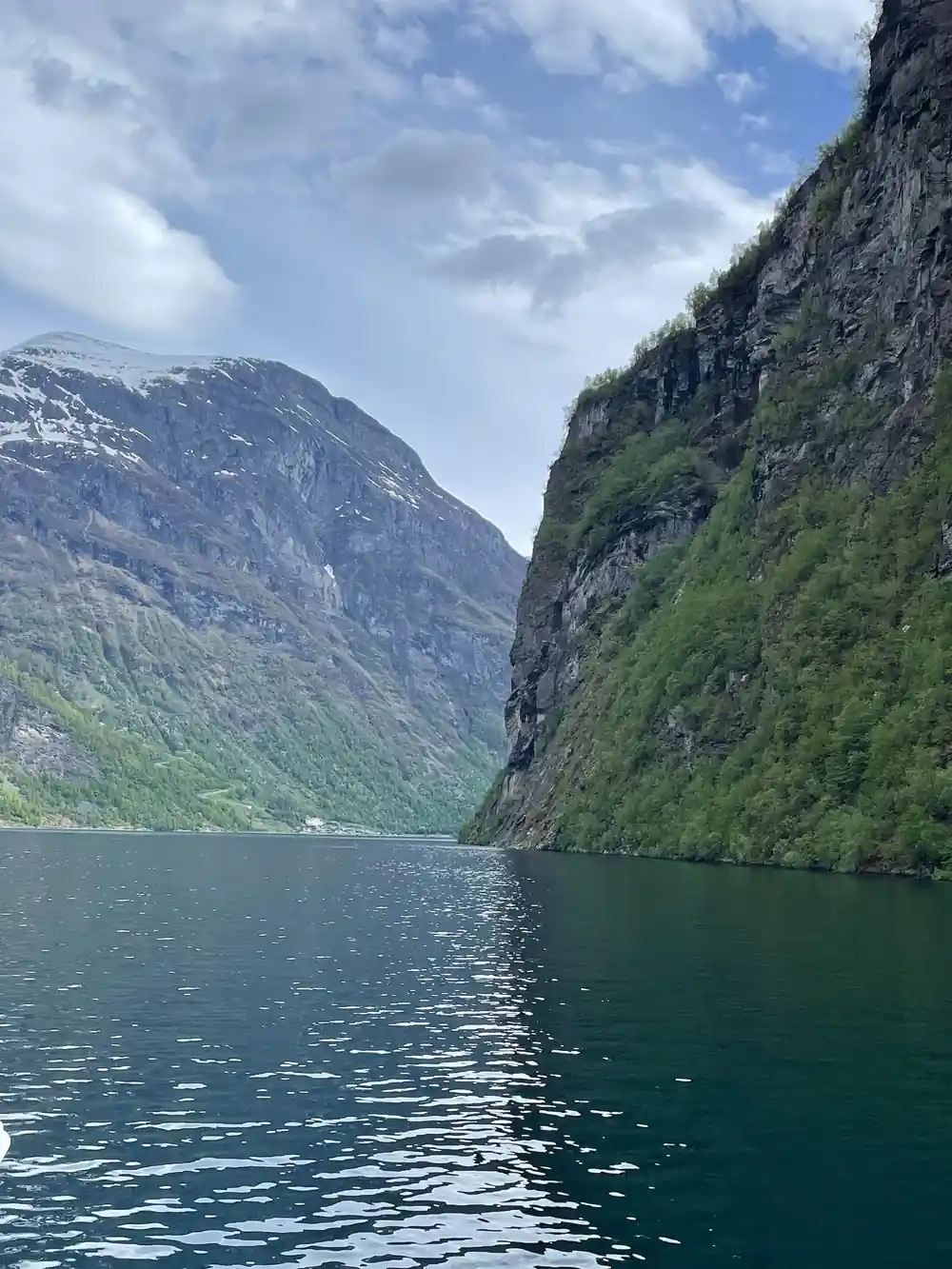
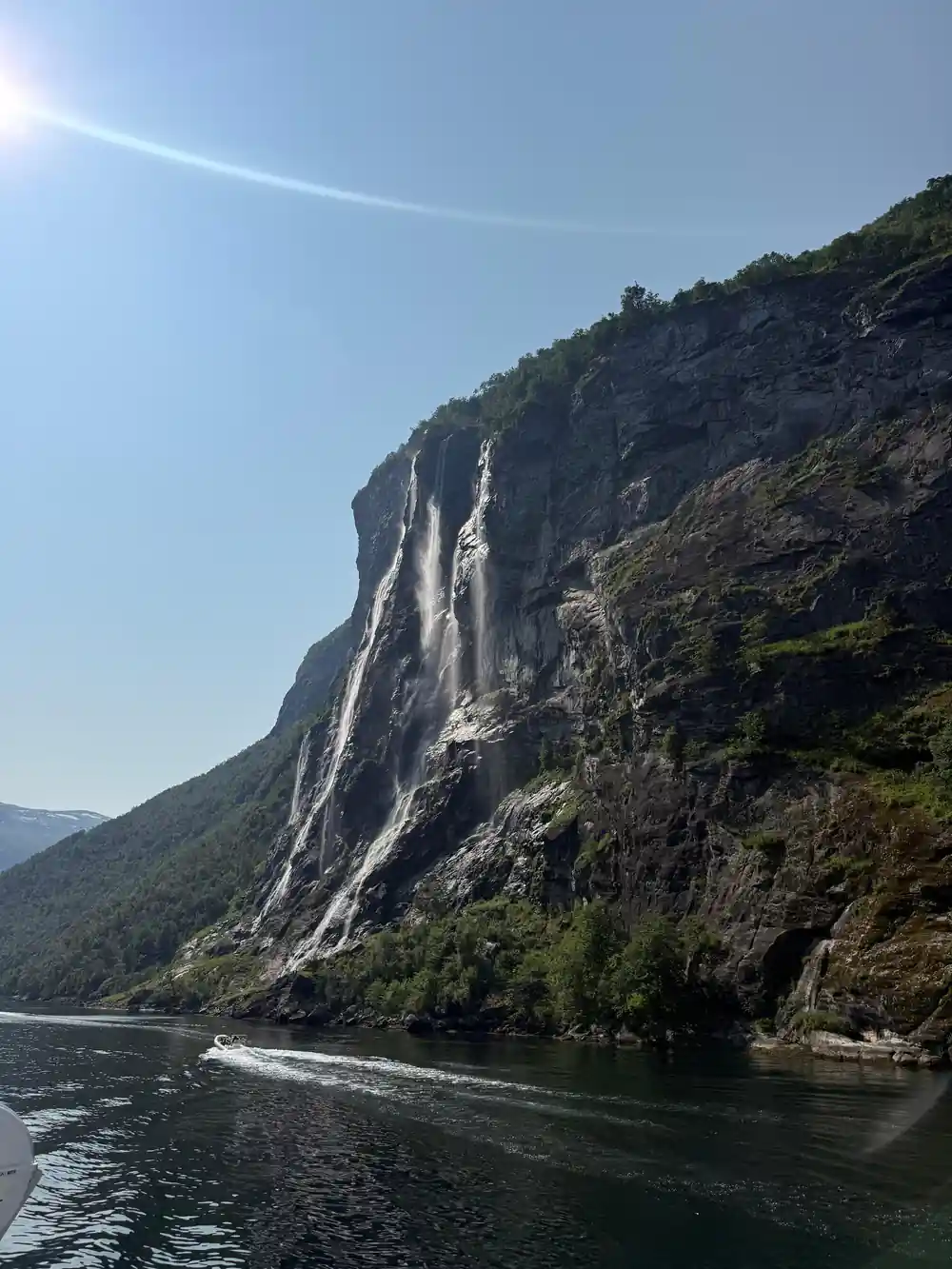
Low cloud, steep walls and waterfalls coming down them: a normal day on Geirangerfjord
The Fosseråsa and Storseterfossen walks: can you do them in time?
Fosseråsa is the walk that starts in the village and climbs beside a waterfall, gaining height steadily until the fjord opens out below you. Storseterfossen is the other famous one, reached from the Vesterås farm area, where a path leads round and behind the falling water so you can stand in the gap between rock and stream.
Both are proper walks rather than quick strolls, and both take a real block out of a short day ashore. If your boat leaves in the afternoon, choose one and do it at a steady pace instead of racing to fit in two. The climb up is the easy part to plan; the descent is where tired legs slow you down, so start earlier than feels necessary.
Wear shoes with grip, because the ground stays wet under the trees, and carry water. If the weather has closed in or you are short of time, stay low and walk the waterfront instead. A small, unhurried look at the fjord from the village is a better memory than a rushed scramble up a hillside.
Viewpoints above the fjord: shuttle, taxi or rental car
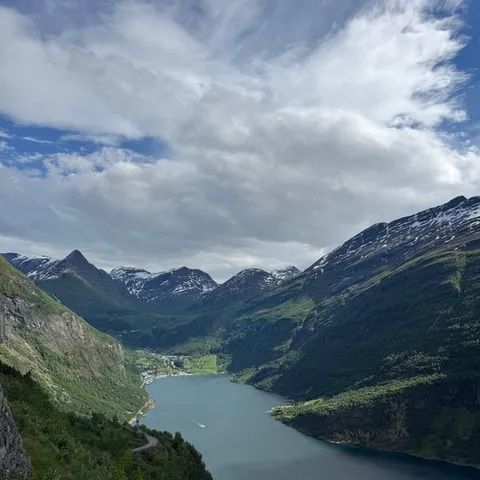
The water gives you the fjord at eye level, which is a wonderful place to be, but the classic photographs are taken from the roads that climb above the village. Flydalsjuvet and Ørnesvingen, the hairpin most people know as the Eagle Bend, both look down on the ships, the village and the long run of the fjord.
Reaching them needs wheels. The boat and bus tour stops at Ørnesvingen on its way back,[2] For a door-to-door day with pickup, the private day trip to Geirangerfjord is from US$1084.[8]
What I would not do is leave transport to chance. The viewpoints sit up a winding mountain road, the village is small and the timetable is fixed, so arrange a seat on a tour, a shuttle or a car before you sail, or accept that the fjord seen from the water is your view of the day. There is nothing wrong with that view.
from US$202
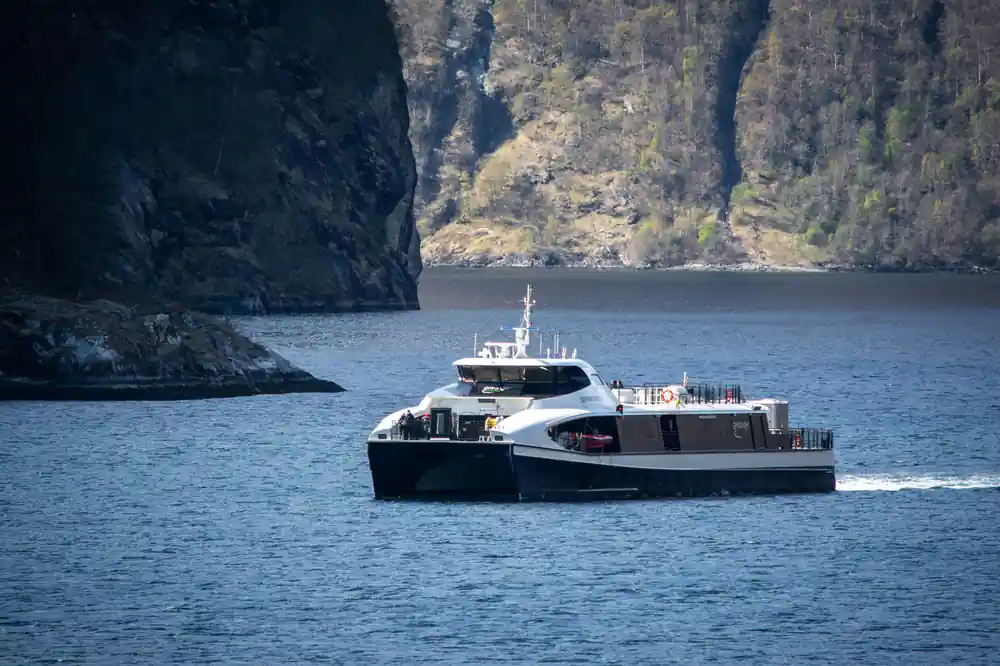
The hybrid electric round trip from Ålesund to Geirangerfjord takes 8.5 - 9.5 hours, with an audio guide and wheelchair access on board.[1]
Where to eat during your stop
Eating in Geiranger is easy as long as you are not too fussy about timing. There are cafés and hotel restaurants around the waterfront and up the village road, and most serve exactly what you want after a cold morning on deck: fish soup, salmon, waffles with sour cream and jam, cinnamon buns and good coffee.
Two habits help. Eat when you land, or straight after your walk, rather than at the moment the whole village decides it is hungry. And carry something in your bag for the boat, because a long crossing in fresh air makes everyone ravenous well before the next meal.
It is worth knowing that eating out in Norway is expensive and that a small village fills quickly when a ship is in. If a sit-down lunch matters to you, sort it early in the day, or plan to eat later once the first rush has gone back to the pier.
Accessibility ashore for wheelchair users and families
The good news starts on the water. The hybrid electric round trip from Ålesund is wheelchair accessible and has an audio guide, so the whole crossing works without leaving your seat.[1] The one-way silent electric cruise is wheelchair accessible too.[7] Access on board still means getting on and off at each end, so ask the crew what the gangway is like before you commit.
Ashore, the waterfront and the first stretch of the village road are level, and that is where most of the cafés are. Beyond that the ground tilts upwards, paths turn to gravel and the waterfall walks include rough, wet and steep sections. Families with small children and anyone using a mobility aid will find the flat loop comfortable and the upper paths hard work.
With children, one clear plan works better than three. A short walk, a look at the fjord, something to eat and a slow return to the boat with time in hand is a full and satisfying day. Nobody remembers the number of stops; everybody remembers standing at the rail as the cliffs come past.
Bad weather and flexible plans
Rain is part of life on this coast, and a wet day in Geiranger is still a good day. For a sense of the temperature range through the year, Ålesund averages 2.8 °C in the coldest month, February, and 14.8 °C in the warmest, August.[9] Pack for both, with a waterproof layer you can move in and something warm underneath.
Wet weather changes what is worth doing rather than whether the day works. Waterfalls are at their most dramatic after rain, and low cloud caught in the fjord is scenery in its own right. If the visibility closes in, swap the high viewpoints for the village and the fjord centre, and take the boat trip instead of the climb.
Flexibility is also a booking question. The round trip from Ålesund comes with free cancellation up to 24 hours in advance for a full refund,[1] which is worth having when the forecast changes. In winter, remember that the Geiranger to Trollstigen Scenic Route is always closed and normally open from mid-May to October/November, depending on when winter returns.[10]
GetYourGuide ratings for tours that reach Geirangerfjord
What a day from Ålesund to the fjord costs
From prices per person in US dollars on GetYourGuide:[1][2][5][7][8]
When to plan your Geiranger day
Plan your Geiranger day
Book the crossing first
The round trip from Ålesund to Geirangerfjord runs 8.5 - 9.5 hours and starts from US$202.[1]
Check your departure time
The listing shows starting times when you check availability, so confirm yours before you plan anything else.[1]
Pick one walk
Fosseråsa and Storseterfossen each take a solid block of time. On a short stop, choose one, or stay on the waterfront instead.
Leave the last hour free
Boats and buses leave on time. Build in the walk back to the pier and a buffer, and you will not spend your last hour worrying.
Keep a wet-weather plan
The round trip has free cancellation up to 24 hours in advance for a full refund, so a change of plan is possible.[1]
Ride the fjord both ways on a silent electric boat
from US$202Reserve now & pay later