The quick version
- The round trip sails from Ålesund across Storfjorden and Sunnylvsfjorden, past the Seven Sisters waterfall and Friaren, into Geiranger, then back again.[2]
- Listed at 8.5 - 9.5 hours from Ålesund, with sailing times for your date shown when you check availability.[2]
- The Seven Sisters waterfall is 410 meters tall in total, and the highest of the seven streams has a free fall of 250 meters.[3]
- The West Norwegian Fjords, Geirangerfjord and Nærøyfjord, was inscribed on the World Heritage List in 2005.[4]
- The cruise dock is in town, literally a 2 minute walk from the cruise port into the city.[5] The waterfront and the boat piers sit along the same stretch of harbour.
| Storfjorden | Sunnylvsfjorden | Geirangerfjord | |
|---|---|---|---|
| Sail order | First on the route[2] | Second on the route[2] | Third, then Geiranger[2] |
| Water | Wide and open | Narrow and steep-walled | The innermost arm |
| Look for | Farm slopes and side fjords | Thin falls high on the rock | Geiranger village at the head |
| Signature sight | Working farms on the lower slopes | Steep walls and narrow water | Seven Sisters, 410 meters tall[3] |
In general, the state of conservation has not deteriorated since the time of inscription on the World Heritage List in 2005.
Is the Geirangerfjord round trip worth a full day?
Before you board
Departure from Ålesund into Storfjorden
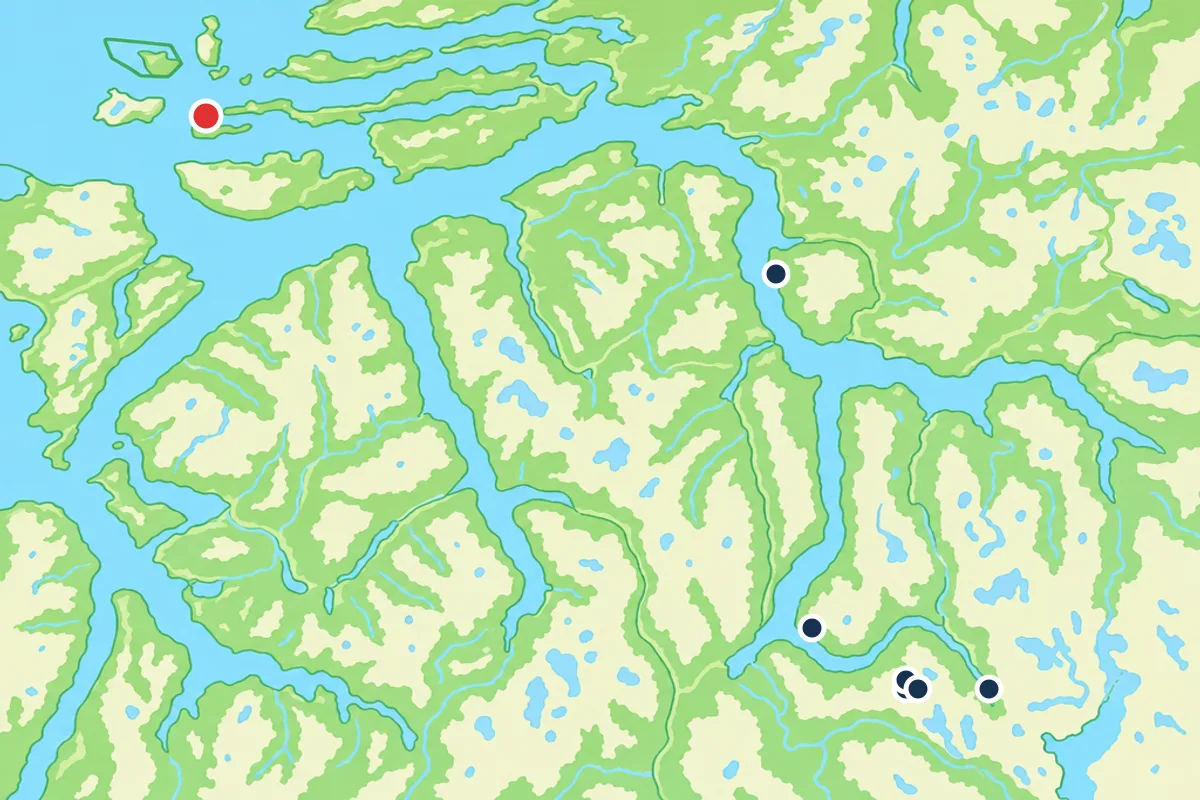
The boat eases away from the Ålesund waterfront and the Art Nouveau roofs slide astern. Within minutes the town is out of sight and the water opens into a wide sound with low green islands on either side. This is the start of the run north east across Storfjorden, the long fjord that leads the way towards Geiranger. Stay on deck if the weather allows, because the light changes constantly here, cloud shadow chasing sun across the slopes, and the mountains grow taller with every mile.
The first stretch is the easiest place to settle in. Find your seat, work out how the audio guide works and decide whether you want to sit inside or out, because you will move between the two all day. A geiranger map on your phone is useful for the shape of the coast, but do not expect to follow every shoreline feature with it. Out here the landmarks are on the water: the bends, the narrows and the side fjords that branch off. Ask the crew which side of the boat to stand on for the first waterfall, and take their advice.
Storfjorden: The Long Approach Inland
Storfjorden means the great fjord, and the name fits. The water is wide, deep and unhurried, with working farms on the lower slopes and mountains layered behind them. This is farming country as much as cruise country: you pass small valleys with hay fields, boathouses at the shoreline and the occasional road clinging to the hillside. If you have traced this water on Geirangerfjord Google Maps at home, the real scale still comes as a surprise once you are out on it.
There is a rhythm to a long fjord day, and this is the slow opening movement. Have a coffee, read the information screens and let the landscape build. The water darkens as the fjord narrows, the mountains move closer together and the first really steep walls appear ahead. Nothing here happens quickly, and that is the point. The middle of the day is for the narrow, dramatic water. The morning is for watching the country open up, one farm and one headland at a time. There is usually space at the rail, and good photographs come from simply waiting rather than chasing the view.
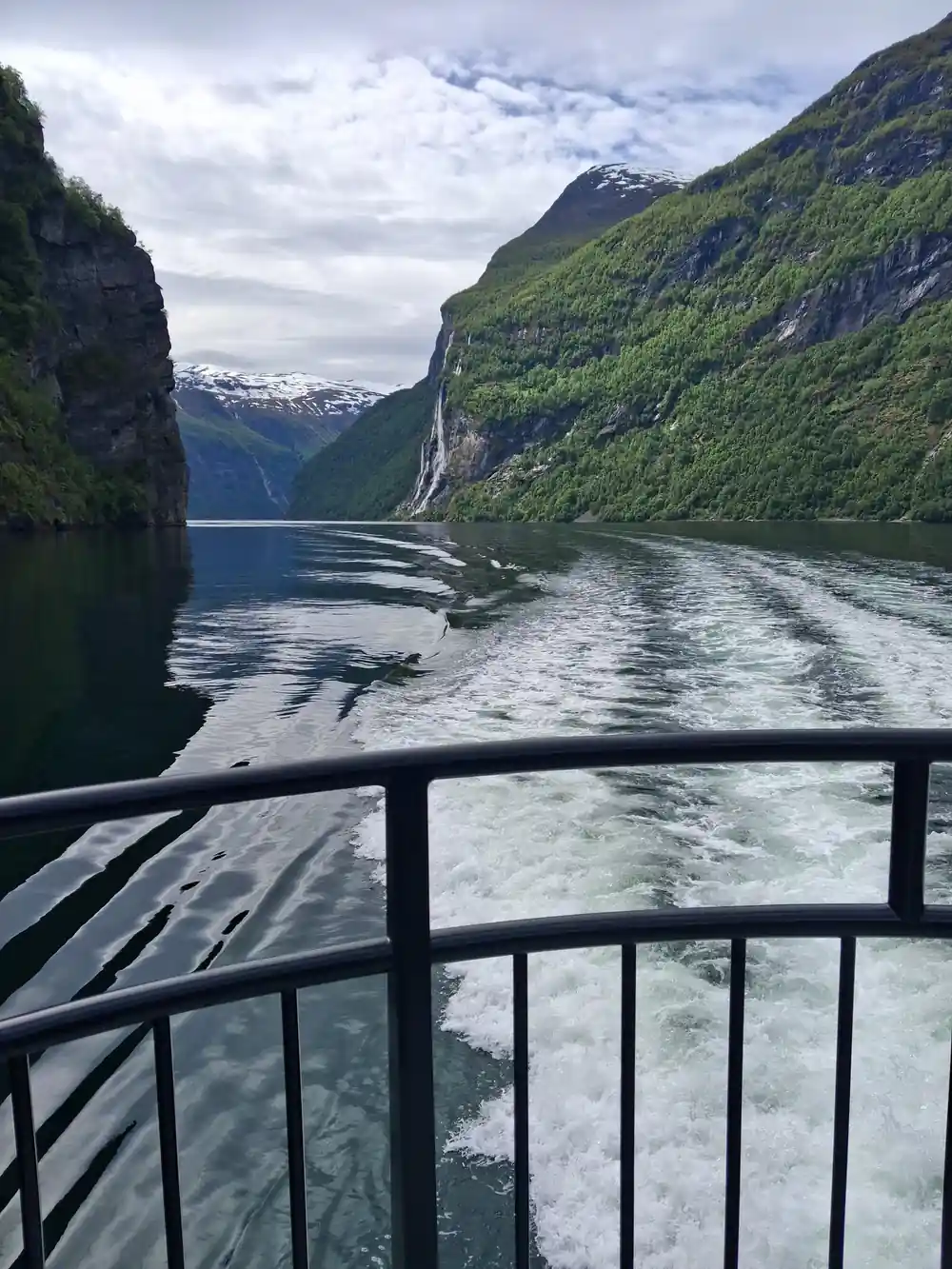
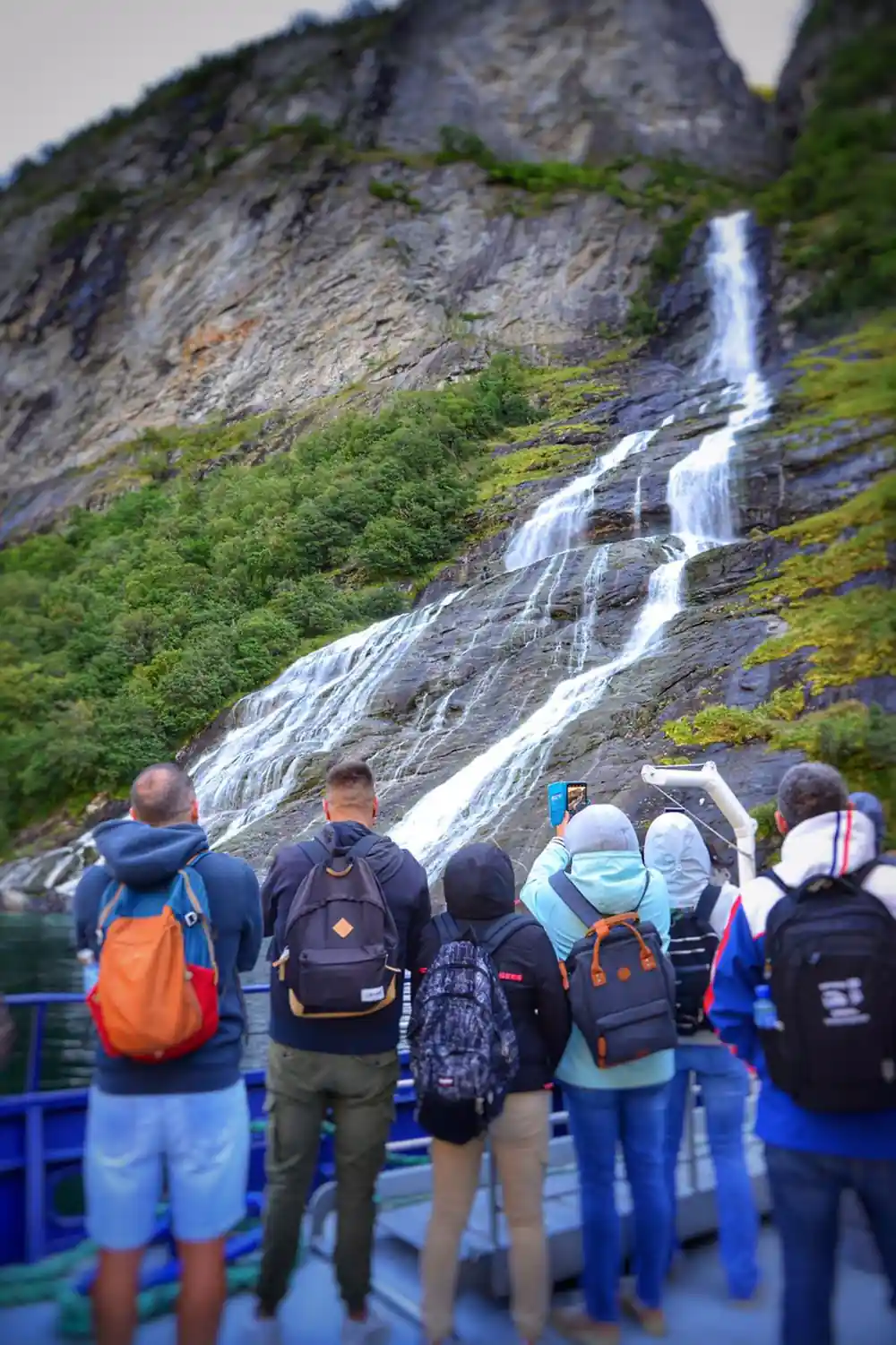
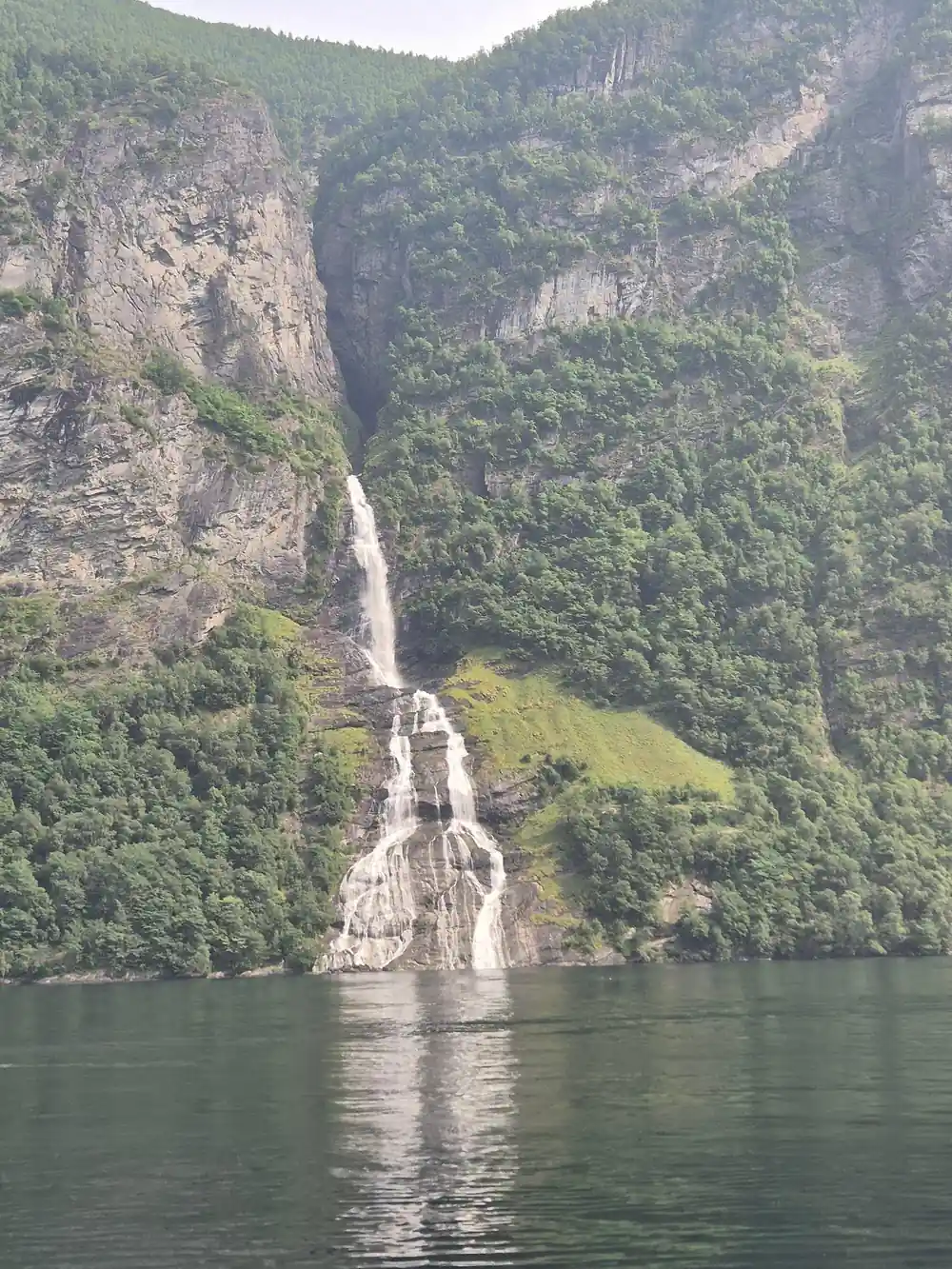
Waterfalls drop down the cliff face beside the boat as the fjord narrows.
The Narrows: Entering Sunnylvsfjorden
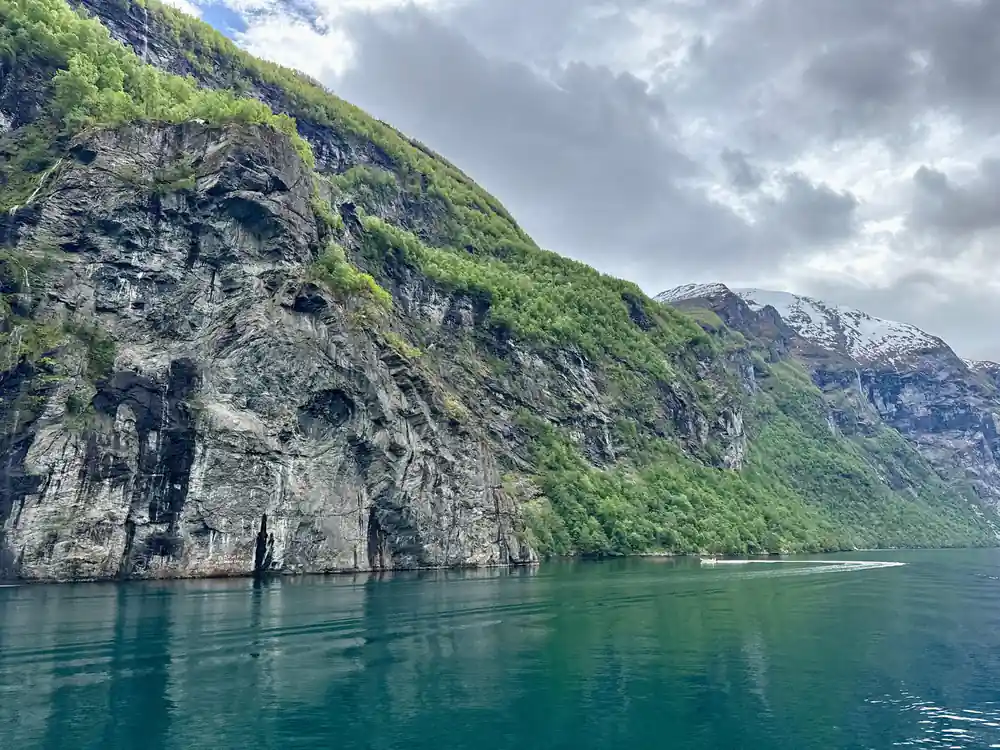
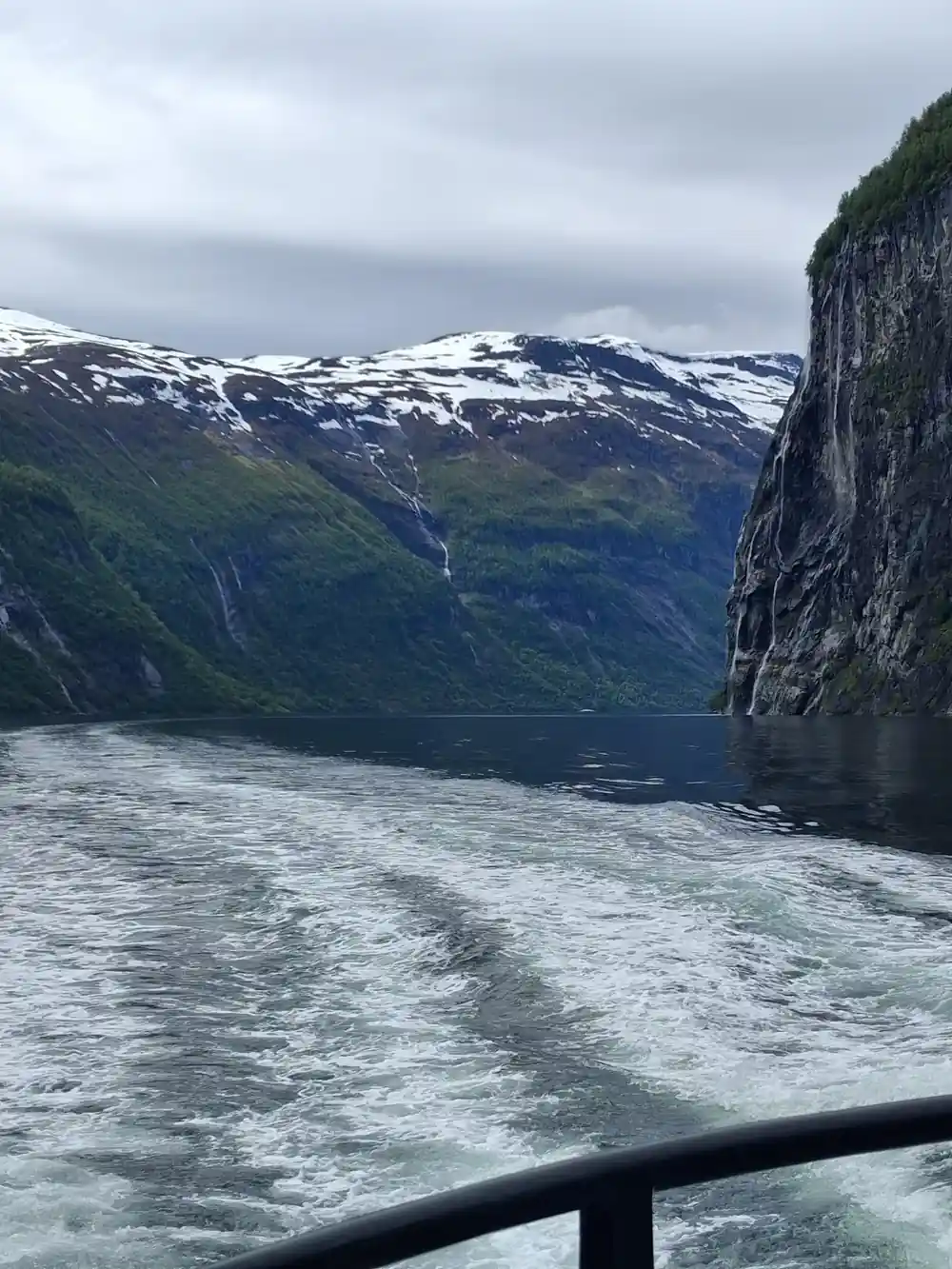
Sunnylvsfjorden is where the day changes character. The fjord pinches in, the walls steepen and the boat slows as it threads between them. Sound carries strangely here, so engine noise, waterfalls and conversation all arrive at once. Look for thin white threads of water high on the rock, most of them fed by snowmelt and summer rain, and for the small patches of green where farms once clung to ledges that look impossible to reach.
This is the stretch to be outdoors for, even if you have been sitting inside with a book until now. The air cools noticeably whenever the boat passes close to a shaded wall, then warms again in the sun. Take a jumper even on a mild day, because a still morning can turn breezy in an hour. If you are travelling with children, point out the stacked terraces high above, where old tracks and stone walls are still visible from the water. On a clear day the far end of the fjord looks close enough to touch, and an hour later it is still ahead of you.
Cliff Ledge Farms and World Heritage Waters
The West Norwegian Fjords, Geirangerfjord and Nærøyfjord, was inscribed on the World Heritage List in 2005.[4] From the deck the geology is easy to read. Dark bands of gneiss and granite run in stripes, and the green shelves between them are the ledges that made summer farming possible for generations. Look for the point where the fjord stops feeling like a valley and starts feeling like a corridor, with water filling the floor and rock rising on both hands.
Farms like these were worked in summer only, and the climb up to them took hours. From the water you can often see the pale rectangles of old buildings and the line of a track zigzagging above them, and it is hard not to wonder how anything was carried up there. Bring binoculars if you have them. They turn a distant speck on a ledge into a farm, and they pick out the sheep still grazed on some of these slopes.
from US$202
The hybrid electric round trip links Ålesund with Geirangerfjord and the Seven Sisters in a single day.[2]
The Seven Sisters Waterfall and Friaren
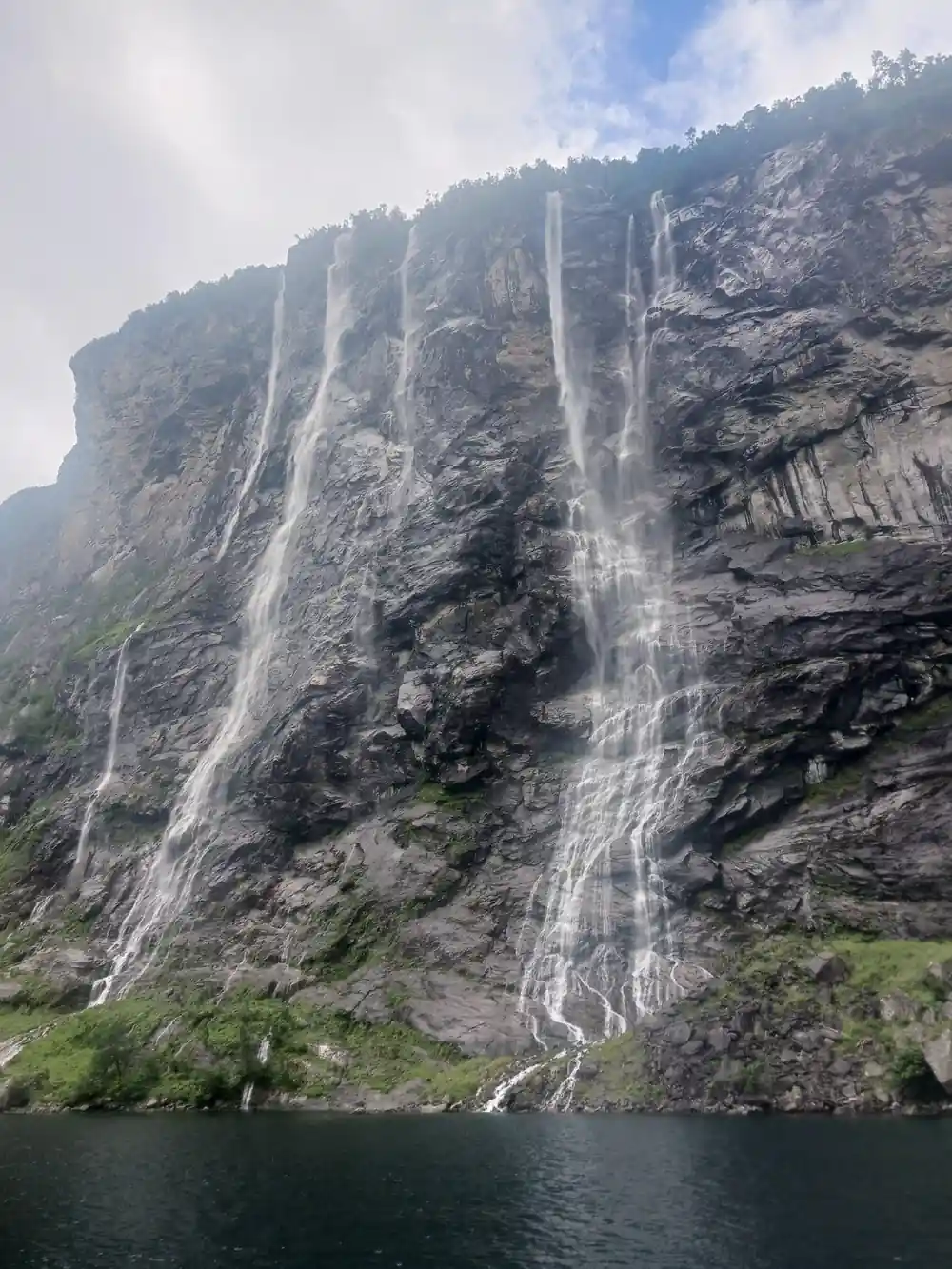
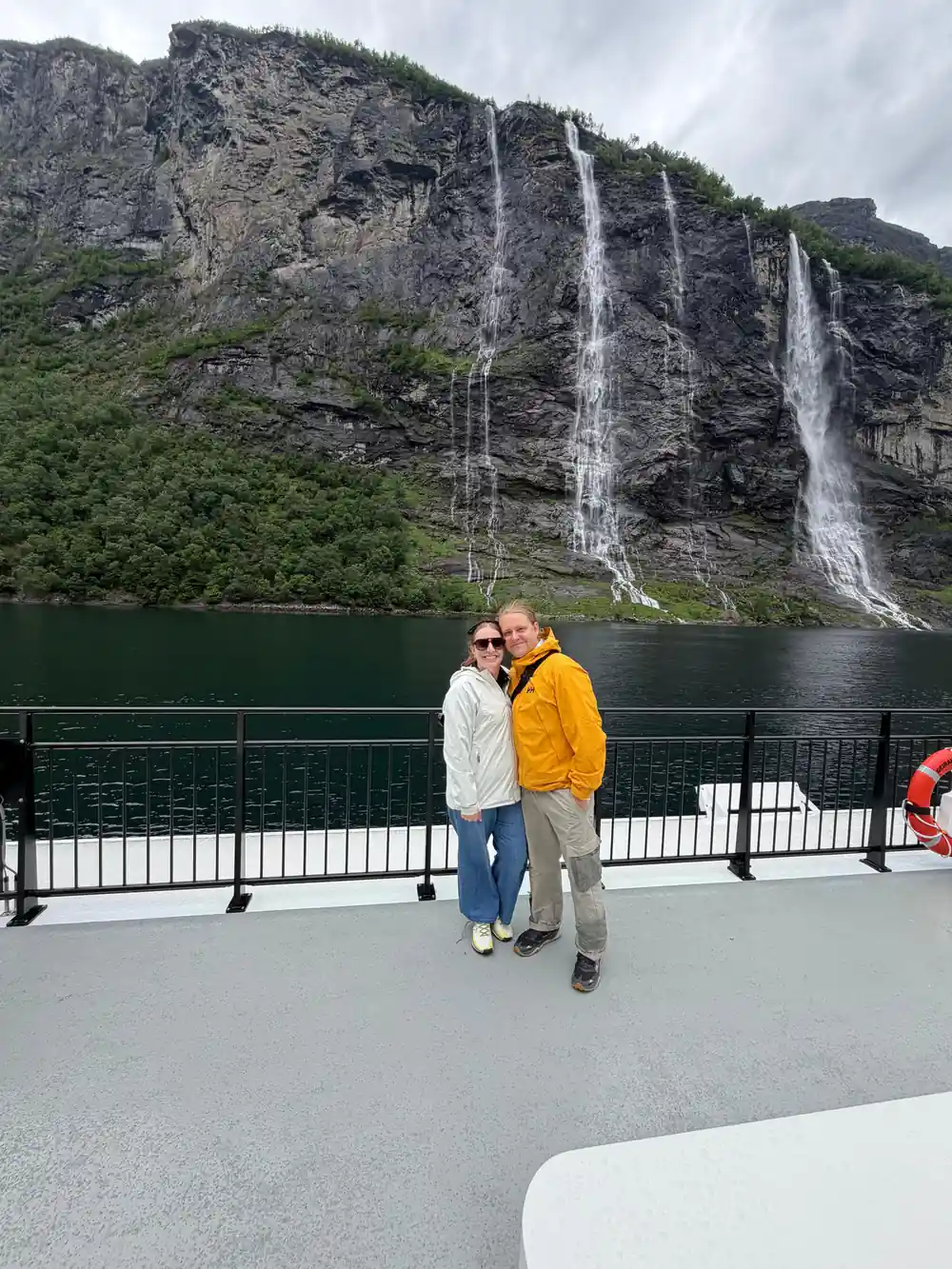
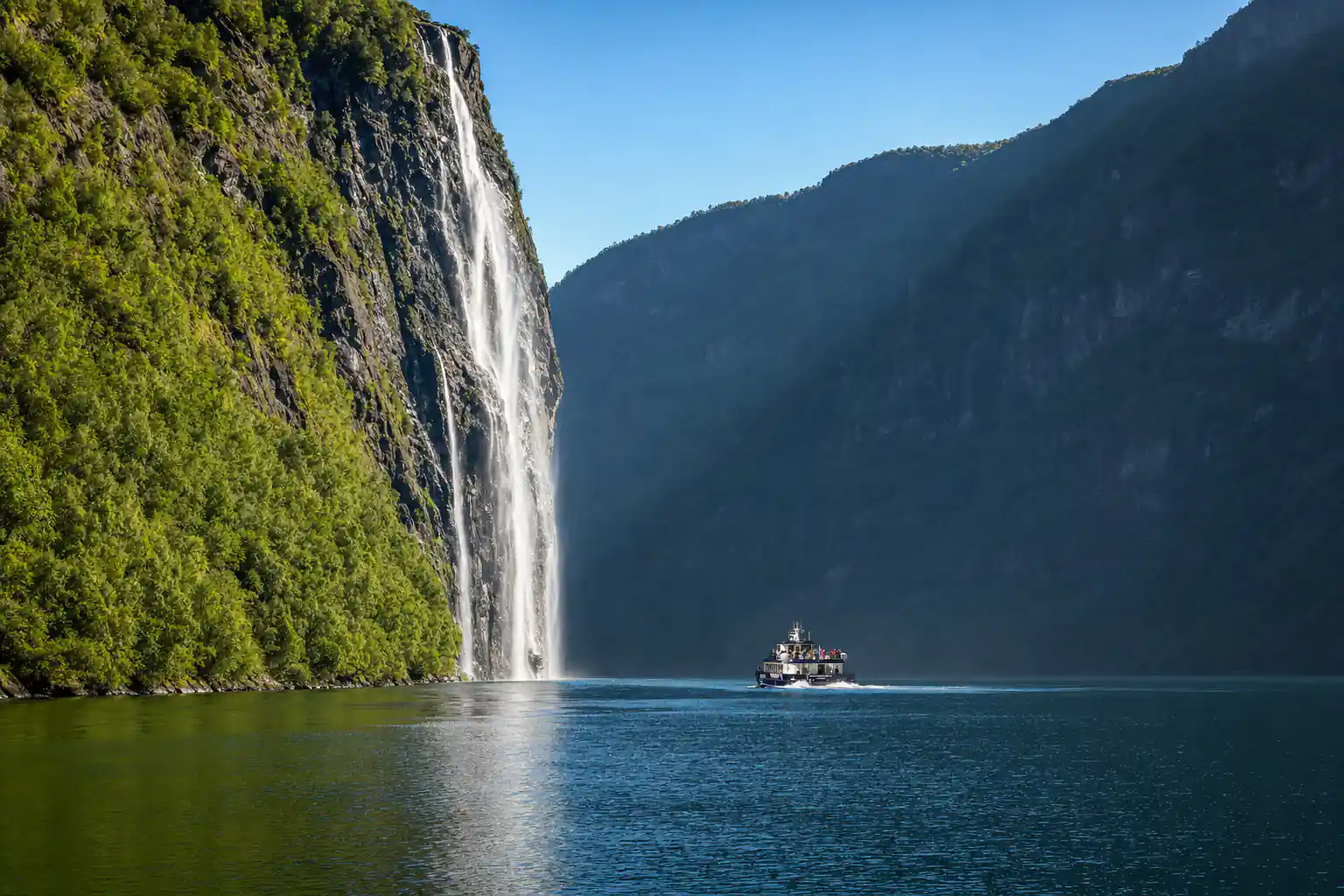
The Seven Sisters waterfall is the headline act of the sail, and it arrives with little warning. Seven separate streams drop down the same cliff face, and after rain or snowmelt they are at their loudest and whitest. The waterfall is 410 meters tall in total, and the highest of the seven streams has a free fall of 250 meters.[3] The open deck is where you want to be for it. Keep cameras under cover until you are ready, and move outside a little earlier once the falls are announced.
A second waterfall, Friaren, comes into view around the same stretch of water, on the sail into Geiranger.[2] The whole scene passes in minutes and everyone crowds the rail, so choose your spot early. Once the falls are behind you the fjord opens towards the village, and Geiranger appears at the head of the water below steep slopes.
Geiranger Village and Time Ashore
The round trip includes a stop in Geiranger before the return sailing.[2] It is a compact village at the head of the fjord: a waterfront, a few shops and cafes, and steep slopes rising straight out of the valley behind. Everything sits within a short walk of the pier, which makes it easy to stretch your legs, buy something warm and be back in good time. Even on a map the village centre looks small, and on foot it takes only minutes to cross.
If you want a view from above the water, the walk up through the village rewards the effort, and there are viewpoints reached by road as well. Otherwise keep it simple. The fjord is the reason you came and the village is a pleasant pause between two long stretches on the boat. Watch the time, because the return sailing leaves on schedule and the boat will not wait. Take a photo of the pier before you wander, so you know exactly where to come back to.
Return Passage: Reversing the Inner Fjord Route
The sail back covers the same water in reverse: Geirangerfjord, Sunnylvsfjorden and Storfjorden, finishing in Ålesund.[2] Stay on deck for the first part, because the light will be different and you will spot things you missed on the way in. The waterfalls face the other way, the hamlets sit on the opposite hand and the shadows have moved around the slopes. It is the same scenery, and somehow a different day. Take a last look at the inner fjord before the walls drop away and the wide water returns.
By the last hour most people are inside with a hot drink, which is the sensible move. The distance from Ålesund to Geiranger is 67 miles (108 km), and the round trip is a long one.[7] Use the time to sort photographs, plan dinner or simply watch the last islands slide past. The town appears on the horizon before you expect it, and you are back at the Ålesund waterfront with the whole fjord behind you.
How long the fjord cruises from Ålesund take
Fjord cruise from prices from Ålesund
From prices in US dollars per person, for the GetYourGuide listings[2],[8],[10],[11].
When to book and when to sail
Your day on the fjord
Board in Ålesund
Check in at the waterfront, take a seat and get the audio guide working before the boat pulls away. Deck space fills early on bright days.
Cross Storfjorden
Settle in for the wide opening leg. This is the calm, open part of the route, with farm valleys on both sides and big mountains behind.
Watch for the narrows
Sunnylvsfjorden tightens the walls and speeds up the scenery. Go outside, put your hood up if it is breezy, and look high for thin waterfalls.
See the Seven Sisters
The seven streams of the waterfall are the highlight of the sail. Pick your side early, keep the camera dry and enjoy the passing show.
Walk in Geiranger
Step ashore at the village at the head of the fjord, stretch your legs, and be back at the pier in good time for the return sailing.
Sail the Geirangerfjord on the hybrid electric round trip
from US$202Reserve now & pay later