The quick version
- Geiranger is a village at the head of the Geirangerfjord, about 67 miles (108 km) by road from Ålesund.[1]
- The West Norwegian Fjords, which include the Geirangerfjord, were inscribed on the World Heritage List in 2005.[2]
- Ships dock in town, a 2 minute walk from the port into the city, and the airport bus takes roughly 15 to 25 minutes.[3][4]
- August averages 14.8 °C, the mountain scenic route is normally open from mid-May, and aurora season runs to late March.[5][6][7]
- The hybrid electric round trip to Geirangerfjord runs 8.5 - 9.5 hours, from US$202, and the boat is wheelchair accessible.[8]
- Top choice Geirangerfjord round trip from US$202 Duration8.5 - 9.5 hours[8]Rating4.75 from 758 reviews[8]RouteStorfjord, Sunnylvsfjord, GeirangerfjordGuidingAudio guide on board Check availability
- Fjord boat with return bus from US$210 Duration10.5 hours[9]Rating4.60 from 140 reviews[9]RouteHjørundfjord, Øye, Norangsdalen, GeirangerGuidingHost or greeter: English See this tour
- Hjørundfjord round trip from US$115 Duration5 hours[10]Rating4.58 from 282 reviews[10]RouteHjørundfjord, Trandal, Saebo, Urke, ØyeGuidingLive tour guide: English See this tour
During the night of 23 January 1904, a fire swept through the largely wooden town.
Worth a full day on the fjord
Getting there and around
Geiranger Village History: Names and Farms
The question of how to pronounce Geiranger tends to come up early, usually while booking a boat. In Norwegian the name begins with a soft g, closer to an English y than to the g in gate, so it comes out roughly as YAY-rong-er, with the stress near the front. Say it however you like; people here are used to visitors and will not correct you.
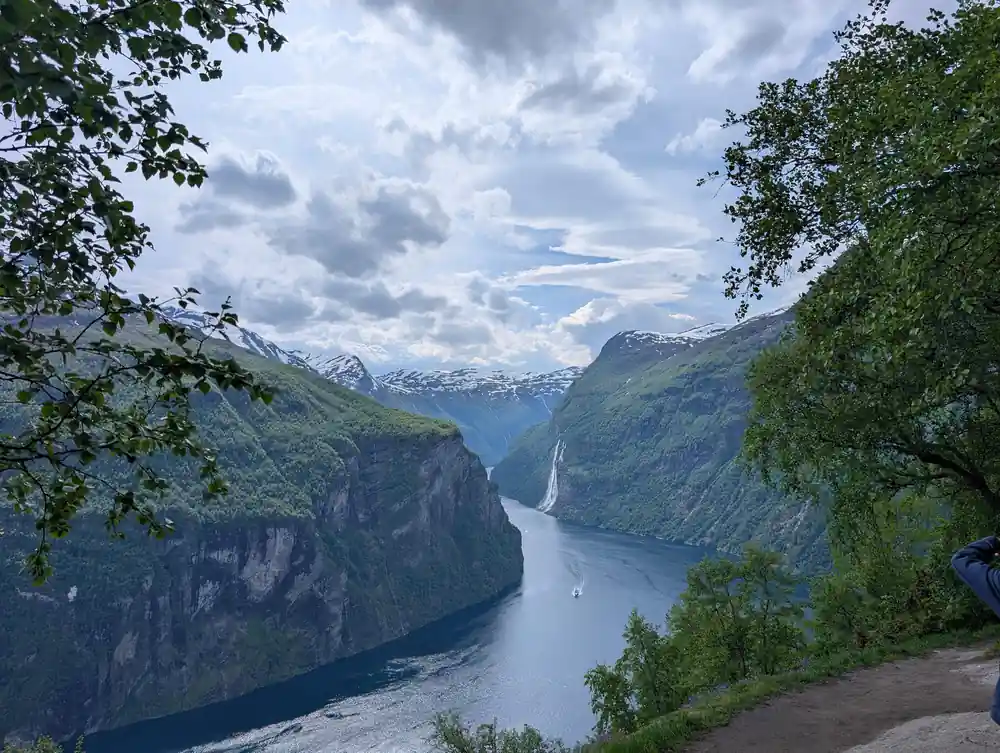
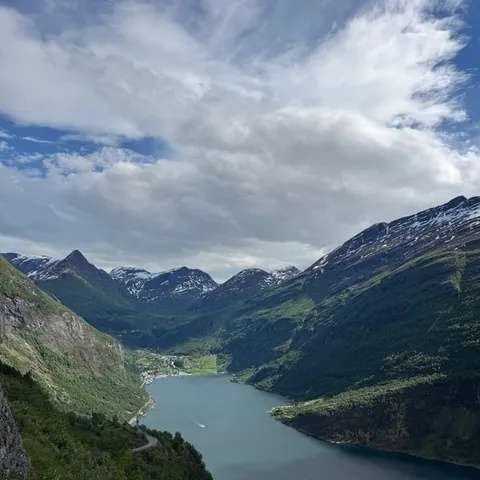
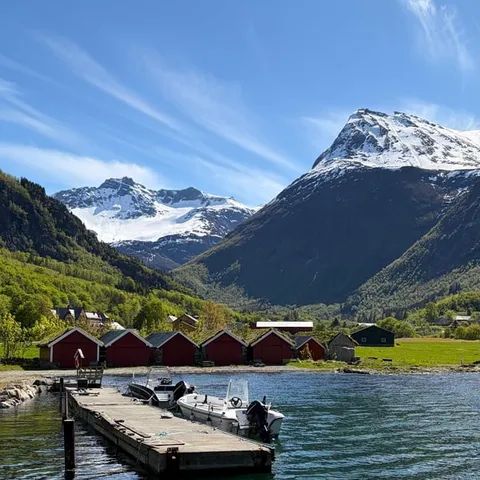
The village itself, usually signposted as Geiranger town, is a cluster of houses, small hotels and campsites on the flat ground at the head of the fjord, where the river from the mountains meets the water. Everything sits close together: the quay, the church, the shops and the road that leads up the valley towards the mountain passes. Seen from the water it looks tiny, which is part of the effect.
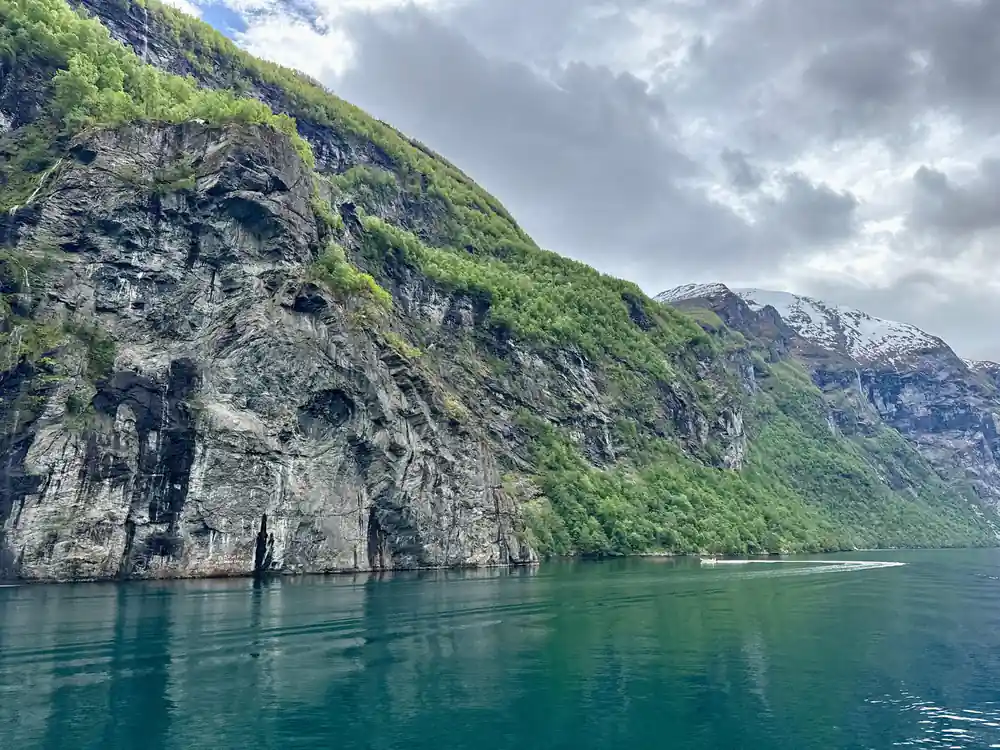
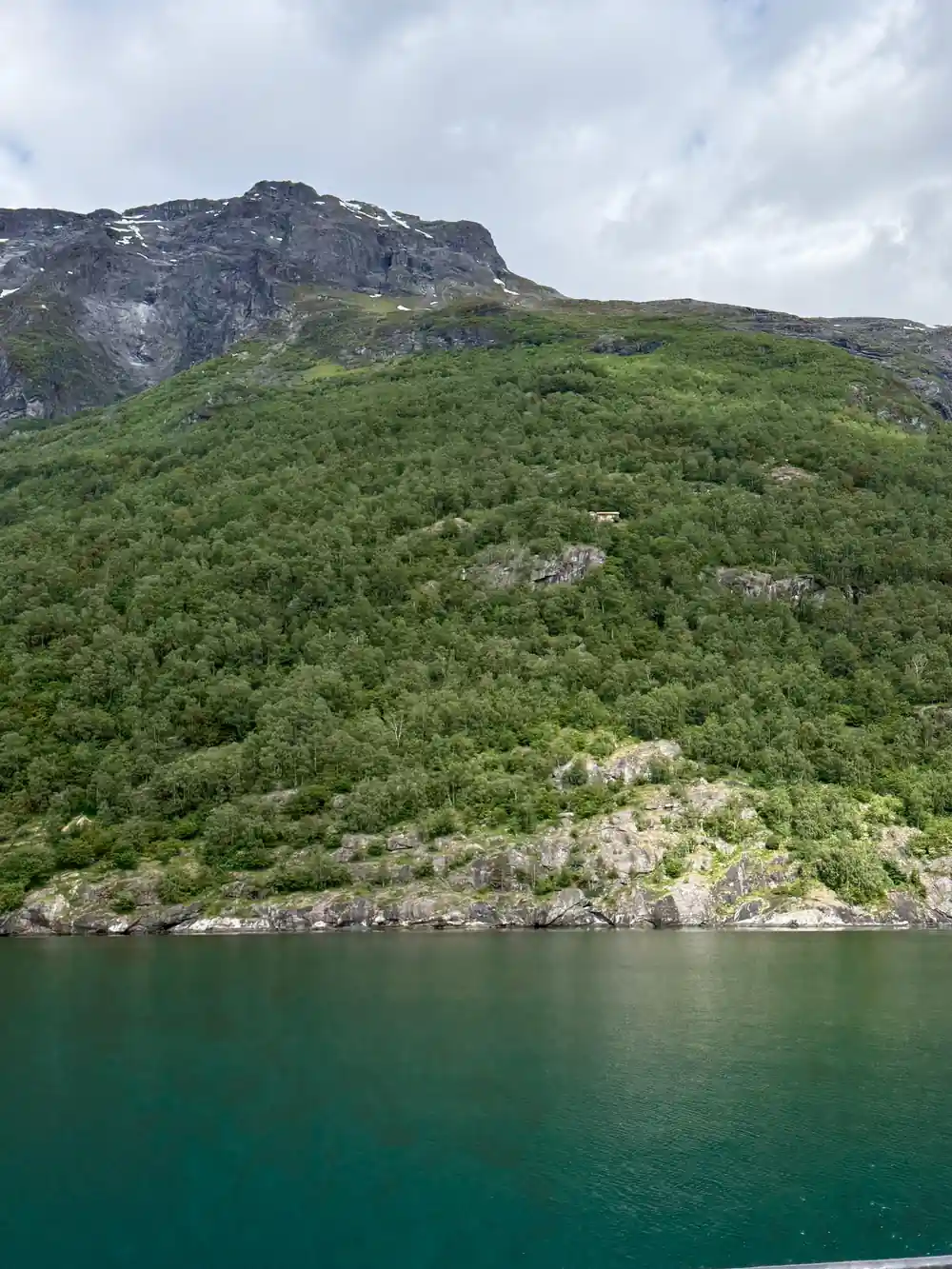
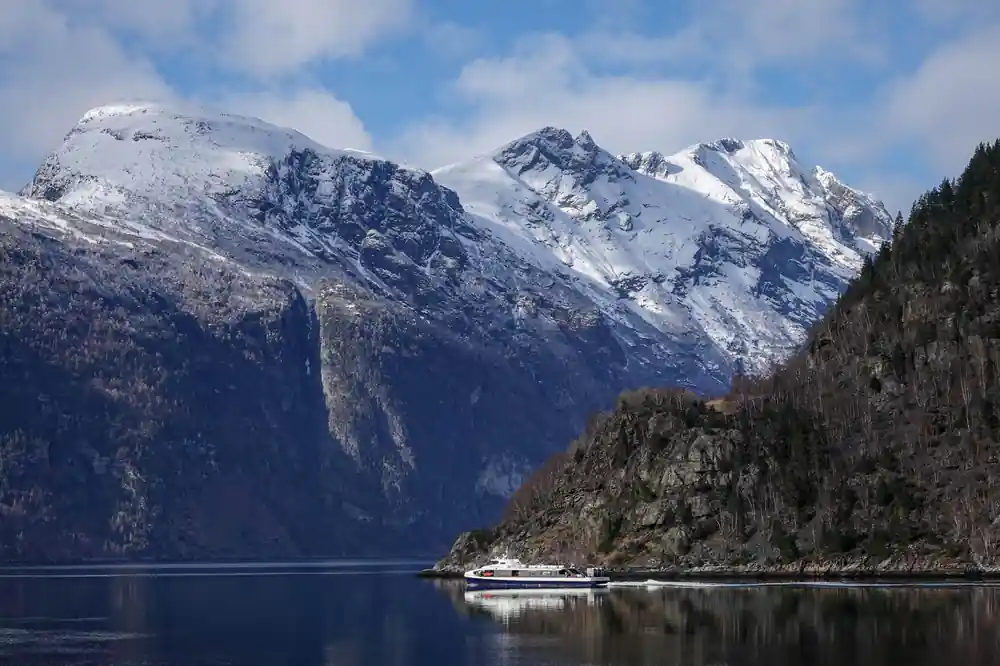
What makes the place unusual is what sits far above those houses. For generations, families farmed narrow green ledges on the fjord walls, reached by steep paths and ladders, and farms such as Skageflå and Knivsflå were given up long ago and now stand empty above the water. From the deck of a boat you can pick out their buildings as small pale shapes on shelves of grass, and the fjord stops looking like a postcard and starts looking like somewhere people actually lived.
Kaiser Wilhelm and the Birth of Tourism
Steamers brought holidaymakers into the fjord long before the roads were any good, and the village's reputation grew among travellers who came north for scenery rather than cities. Kaiser Wilhelm II was a repeat summer visitor, and his fondness for the fjord is still part of local storytelling, told on hotel terraces and boat decks with a certain amount of relish. What the era left behind was the habit of seeing Geiranger from the water.
The pattern has never really changed. Visitors arrive by ferry, cruise ship and electric boat rather than coal-fired steamer, but the performance is the same: the fjord narrows, the walls rise, the waterfalls come into view, and everyone goes out on deck at once. The village faces the water because that is where the attention has always been.
Roads did eventually arrive and changed the village again, opening it to coach tours and to drivers coming over the passes from Eidsdal and Stranda. Today the fjord can be reached from the sea and from the mountains, and the two approaches give completely different views of the same place.
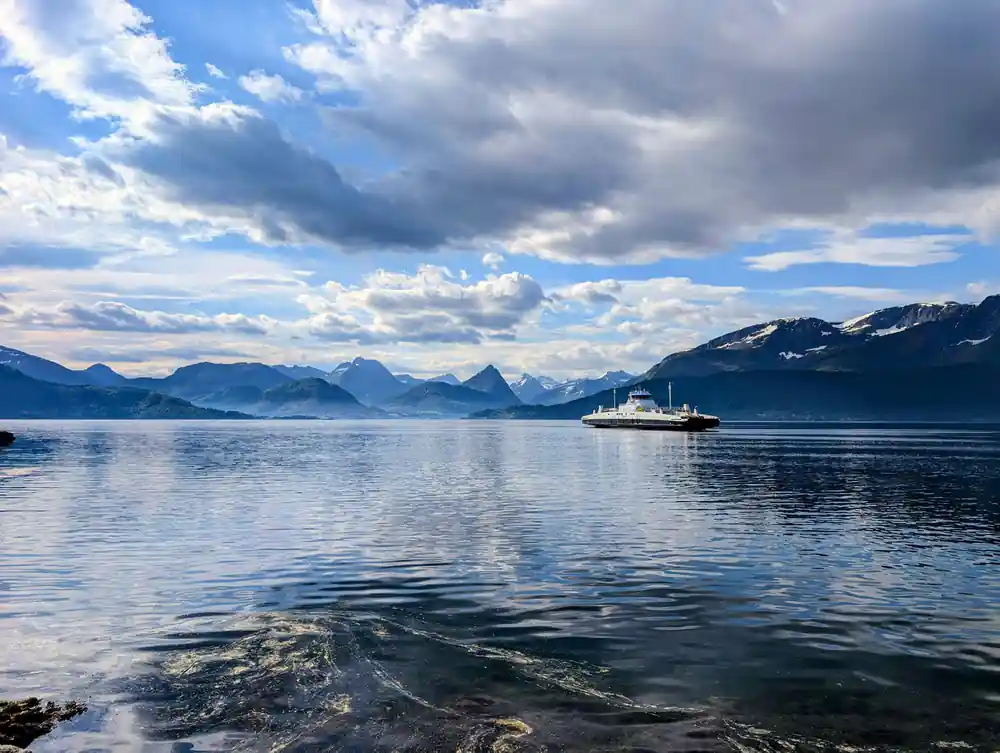
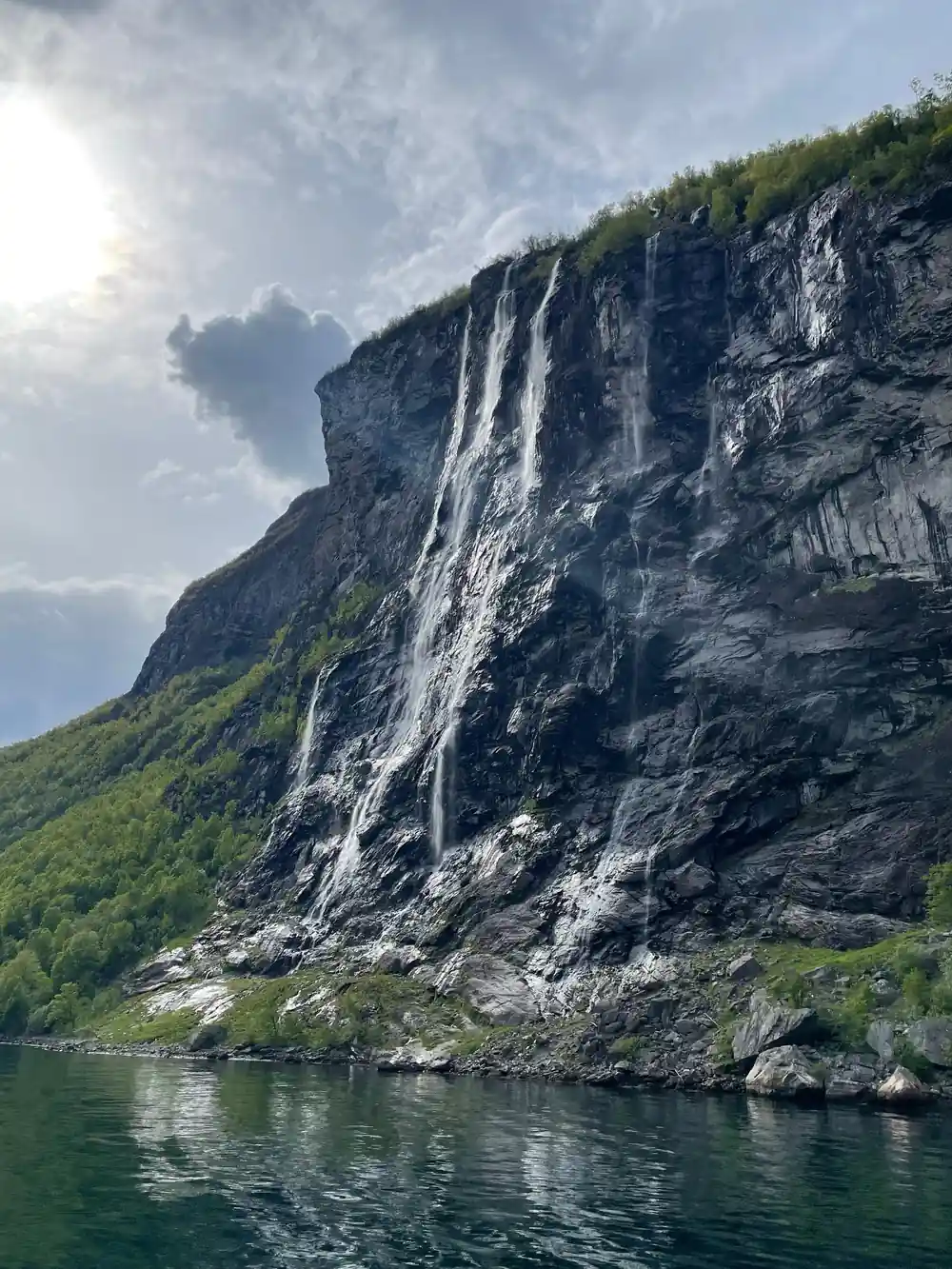
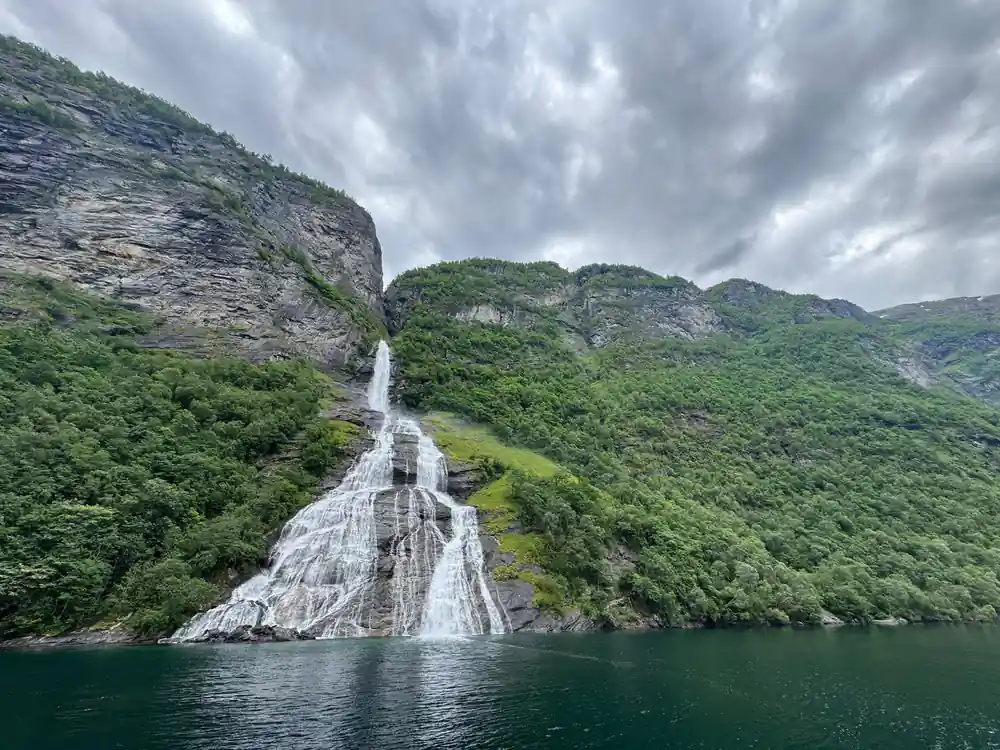
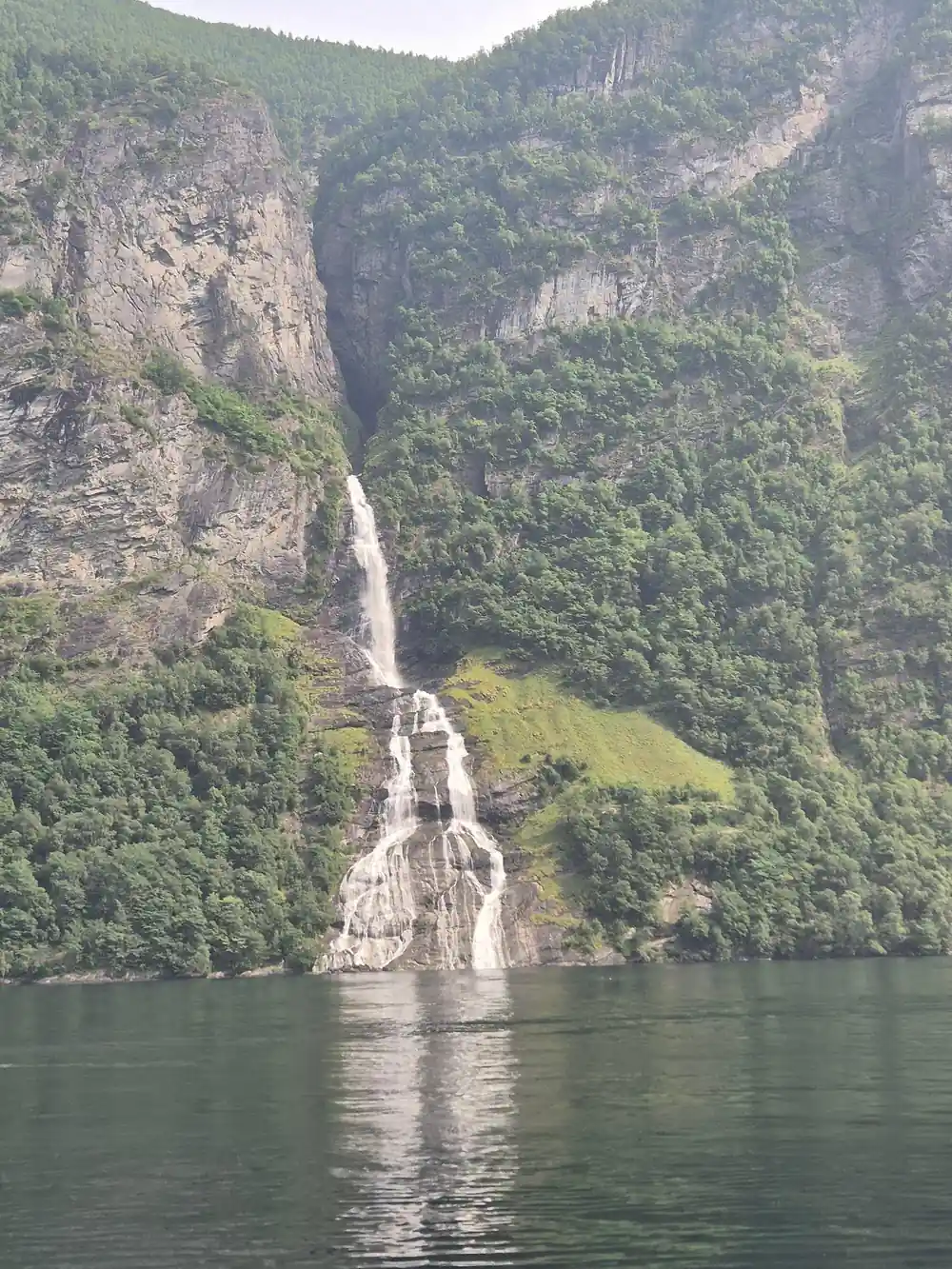
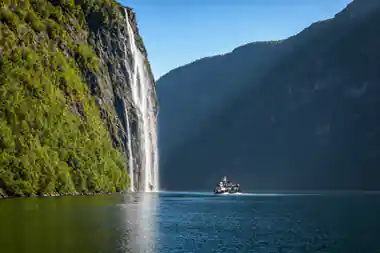
Waterfalls drop straight into the fjord as the boat makes for the village at the head of the water.
The Eagle Road and the Mountain Passes
Above the village, the Eagle Road climbs from the waterfront in tight hairpins to a series of viewpoints, and it is the classic way out of Geiranger by land. The bends are narrow and the drop is immediate, so drivers who dislike heights do better as passengers. Coaches use the road all summer, which says something about how manageable it is in the right vehicle.
Further along, the Norwegian Scenic Route Geiranger-Trollstigen is always closed in winter and normally open from mid-May to October/November, depending on when winter returns.[6] If driving the passes is part of your plan, check current conditions and leave room in the day for a slower-than-expected run.
Even without a car, the passes matter, because several boat and bus combinations use them. A fjord boat tour with the return leg by bus is listed at 10.5 hours, going out on the water and coming back over the mountains.[9] You see the cliffs from below in the morning and the same water from the switchbacks in the afternoon.
The Cruise Ship Era
Cruise ships changed the scale of tourism along this coast, and Ålesund is one of the regular calls. The town recorded 290 cruise ship arrivals in 2024.[11] The dock sits right in town, a 2 minute walk from the port into the city, so passengers step off among the Art Nouveau buildings rather than into a distant terminal.[3]
From there the fjord is the big day out. Geirangerfjord is a long arm of water with a narrow inner section, and the village at its head is where the boats turn around. Cruise ships, ferries, ribs and small electric boats share the same water in summer, along with kayaks and the occasional fishing boat, and the wakes and camera phones are all part of the picture.
Ålesund's own history shapes how visitors read the region. A fire swept through the largely wooden town during the night of 23 January 1904, and the town rebuilt afterwards is the one you walk through today.[12] It is a useful reminder that these coastal towns have been rebuilt, resupplied and reimagined more than once.
from US$202
The hybrid electric round trip from Ålesund to Geirangerfjord runs 8.5 - 9.5 hours, with an audio guide on board.[8]
The Norwegian Fjord Centre
The Norwegian Fjord Centre in the village does the job a good visitor centre should: it explains how the fjord landscape was formed and how people lived on and around it. The West Norwegian Fjords, which include the Geirangerfjord, were inscribed on the World Heritage List in 2005, and this is the place to get that story straight before you look at the real thing.[2]
Inside, the geology, the farming history and the story of the families who worked the high farms are pulled together, with the fjord usually visible through the windows. It is a sensible stop when the weather turns, and a good first hour if you want the scenery to mean more than a photograph by the time you board a boat.
It is also the natural place to ask about walking routes, path conditions and what is open in the valley, since that changes through the season. Local advice about snow, loose rock and closing times is worth more than any plan made at home.
Winter Isolation and Seasonal Survival
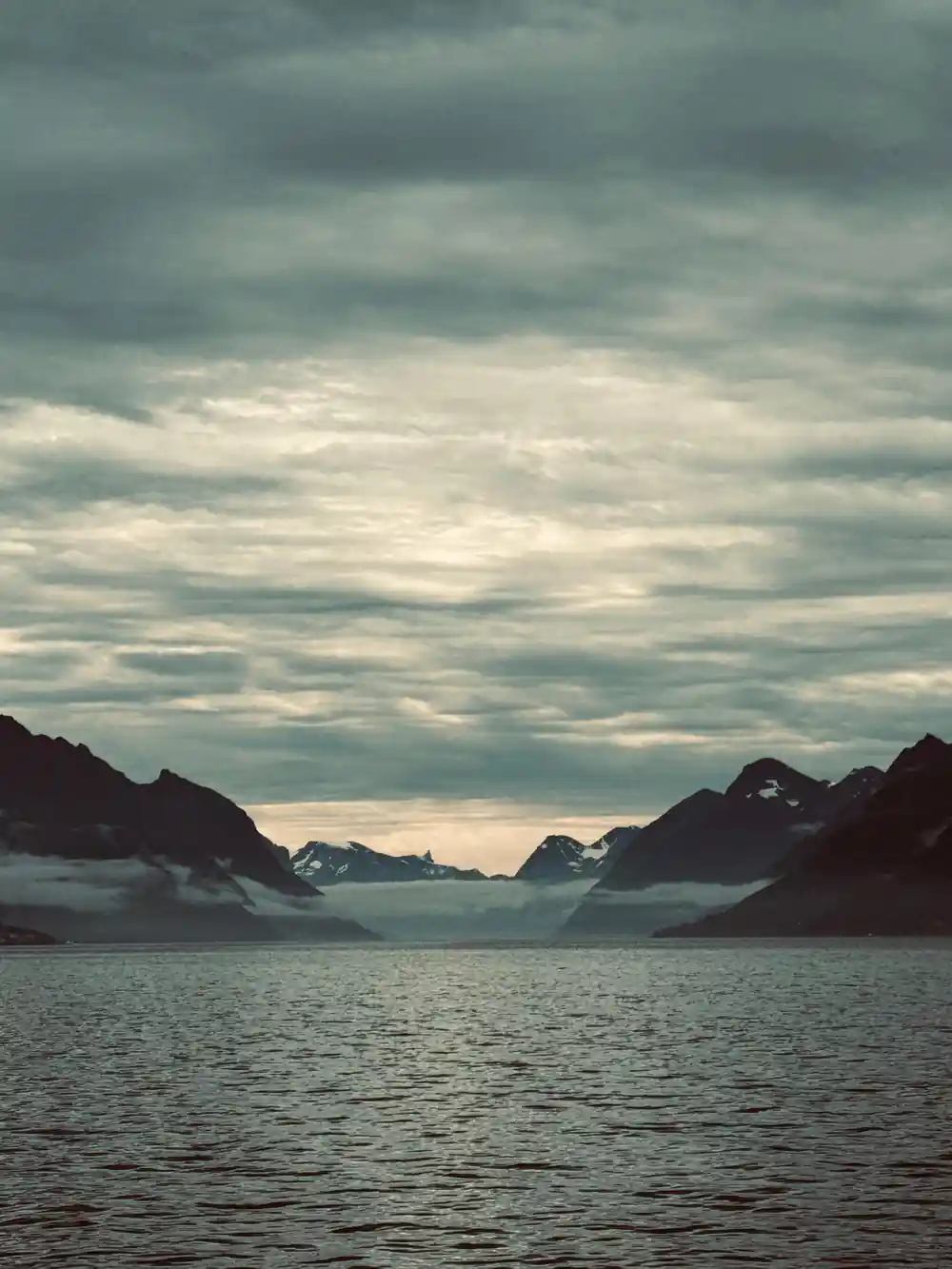
Winter in Geiranger is quiet in a way summer visitors find hard to picture. The scenic mountain route closes once the snow settles, and the village contracts to its year-round residents and the people who keep things running.[6] Waterfalls freeze into pale streaks on the rock, the fjord goes flat and grey, and the place belongs to the weather.
It is not a deep polar cold. Ålesund, the town on the same coast, averages 2.8 °C in the coldest month, February, and 14.8 °C in the warmest, August.[5] That is the measure of this stretch of coast: mild and wet rather than crisp and dry, with rain in every month and snow that comes and goes at sea level.
Winter has its own attractions. The northern lights can be seen over Ålesund during moderate to strong geomagnetic activity, and the best viewing season runs from late September through late March.[7] Dark nights and a little patience matter more than equipment, and a fjord horizon with no town lights on it helps as well.
Planning Your Visit
The simplest way to see the fjord from Ålesund is by boat and back in a day. The Ålesund to Geirangerfjord round trip on a hybrid electric boat runs 8.5 - 9.5 hours, from US$202, and the route takes in Storfjorden, Sunnylvsfjorden, Geirangerfjord, the Seven Sisters waterfall, Friaren and the village of Geiranger before turning for home. The boat is wheelchair accessible and carries an audio guide.[8]
Other options suit different appetites. A fjord boat tour with the return leg by bus is listed at 10.5 hours, from US$210.[9] A one-way silent electric crossing takes 3 hours, from US$112.[13] A Hjørundfjord round trip, which heads into a different arm of the fjord system, runs 5 hours, from US$115.[10]
In summer, book before you arrive and check the forecast the night before; the fjord is at its best in clear light, and the boat is the day, not a filler between other things. Free cancellation up to 24 hours in advance makes an early booking easy to change.[8] To reach the port, the Airport Express Bus (Flybussen FB65) runs between the terminal and Ålesund sentrum in roughly 15 to 25 minutes.[4]
From prices for fjord trips leaving Ålesund
What a fjord day from Ålesund costs
Amounts are GetYourGuide from prices for these three listings; child rates are not published, so the same from price is shown for both.[8][9][10]
When to go to Geirangerfjord
Plan your Geiranger day
Pick your date
Summer brings the longest days, so check departures for the dates you have in mind and build the day around the boat.
Book the boat
Reserve the round trip you want early, then use free cancellation up to 24 hours in advance if the forecast turns.[8]
Plan the port morning
Ships dock in town, about a 2 minute walk from the port into the city, so you can be on the quay quickly.[3]
Pack for the deck
Ålesund averages 14.8 °C in August and 2.8 °C in February, and rain is common, so layers and a light waterproof beat one heavy coat.[5]
Use the village stop well
The round trip calls at Geiranger, and the stop suits the waterfront and a short walk rather than a long hike inland.
See the fjord from the water on a hybrid electric boat
from US$202Reserve now & pay later