The quick version
- Meltwater and rain sit in a cold surface layer on top of the salt, and glacial powder in that layer turns the fjord milky green on bright days.
- White-tailed eagles patrol the cliffs, porpoises and seals work the fjord, and goats graze the green ledges high above the waterline.
- Between April and August, more than 30,000 puffins come to the cliffs at Runde to breed.[1]
- The Ålesund to Geirangerfjord round trip takes 8.5 to 9.5 hours on a hybrid electric boat, from US$202.[2]
- People swim in summer from sheltered spots, but the surface layer is cold and the deep water underneath is colder still.
- Top choice Geirangerfjord round trip from US$202 Duration8.5 - 9.5 hours[2]Rating4.75 from 758 reviews[2]GuideAudio guide included[2]RouteGeirangerfjord both ways[2] Check availability
- Winter fjord cruise from US$325 Duration9 hours[3]Rating4.76 from 105 reviews[3]GuideLive tour guide[3]RouteFjord cruise in winter light[3] See this tour
- Boat and bus to Geiranger from US$210 Duration10.5 hours[4]Rating4.60 from 140 reviews[4]GuideHost or greeter: English[4]RouteBoat one way, bus back[4] See this tour
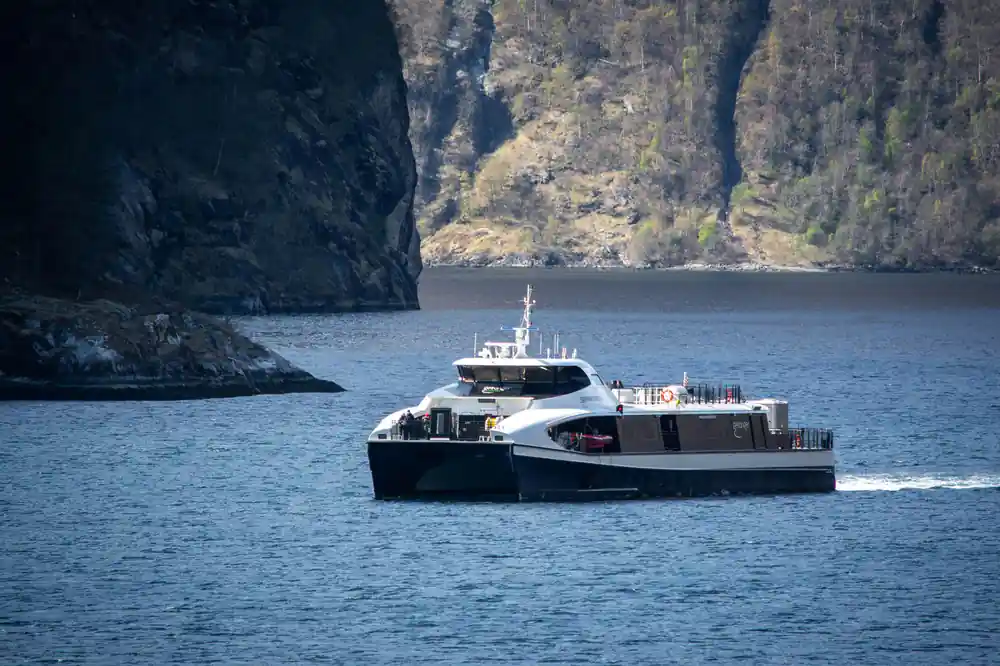
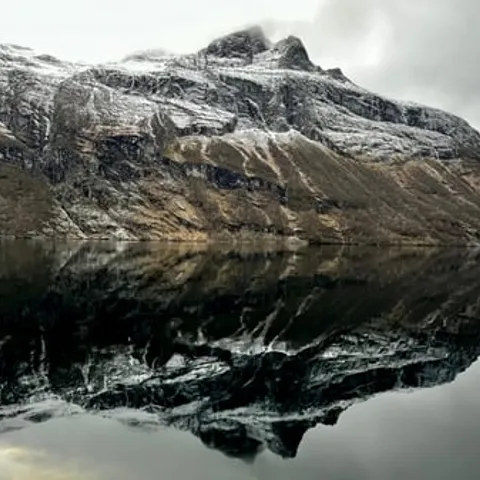
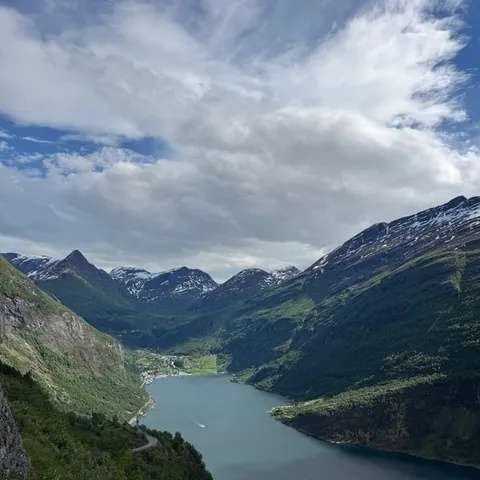
Your 4-hour journey starts from Ålesund harbor, where Art Nouveau buildings frame views of the open Atlantic. As MS Gamle Havstein sails toward fishing grounds near Alnes and Godøya, your crew shares stories about coastal fishing traditions while preparing equipment suited to current conditions.
Is the Geirangerfjord round trip worth it?
Before you board
While you are out there
- Dress warmer than the town forecast suggests; fjord air is colder than the streets of Ålesund.
- Binoculars make the difference for eagles and seals, and a spare pair makes you popular.
- Scan the waterline for porpoises and the cliff ledges for white-tailed eagles.
- Keep cameras under cover; spray from the waterfalls reaches the deck.
Marine life you might spot from deck
The deck of a fjord boat works like a moving hide, and the engine note matters more than most people expect. Gulls trail the wake, cormorants stand on low rocks with their wings spread to dry, and eider ducks paddle close inshore with their ducklings strung out behind them. The hybrid electric boat runs quietly, and ducks and grebes often sit close to the hull rather than flying off. Take binoculars, keep them round your neck, and scan the waterline and the cliff ledges rather than the empty sky. Seabirds here feed on the move: a splash or a tight cluster of birds over one patch of water usually means fish underneath, and fish often mean something larger following.
Runde, out on the coast, is the great seabird island of this region. Between April and August, more than 30,000 puffins come to the cliffs at Runde to breed.[1] They nest in burrows and on grassy ledges, and they fly like small, frantic torpedoes with beaks full of sand eels. Along Geirangerfjord itself the birds are fewer but the backdrop is bigger. Kittiwakes, ravens and the occasional eagle cross the water, and cliffs that look empty from a distance often hold plenty of birds once you steady your binoculars and wait. Sit on the side of the boat that faces the cliffs, and check with the crew which way the boat turns at the waterfalls.
Whales, porpoises and seals in these waters
Big whales belong to the coast, not the inner fjord. The open water outside the islands, where the shelf drops away and currents push food together, is where minke whales, humpbacks and orcas turn up. A boat heading out towards Alnes and Godøya has a better chance of meeting them than one threading a narrow fjord between high walls. A 4-hour guided sea fishing trip departs from Ålesund harbour and sails to fishing grounds near Alnes and Godøya.[5] Even without a whale, that is a few hours on open water with a rod in your hand and the coast laid out behind you.
Inside the fjord, look for the small, quick things. Harbour porpoises surface briefly, show a rolling back and a puff of breath, then vanish for minutes at a time. Harbour seals and grey seals haul out on low skerries and watch passing boats with dark, wet eyes before sliding back into the water. Both are shy, and both are easier to see when the boat is quiet and moving slowly. Pick one stretch of water and watch it properly for a few minutes instead of sweeping your eyes across the whole view. Tell the person next to you what you are looking at, and let them keep watching while you reach for a camera.
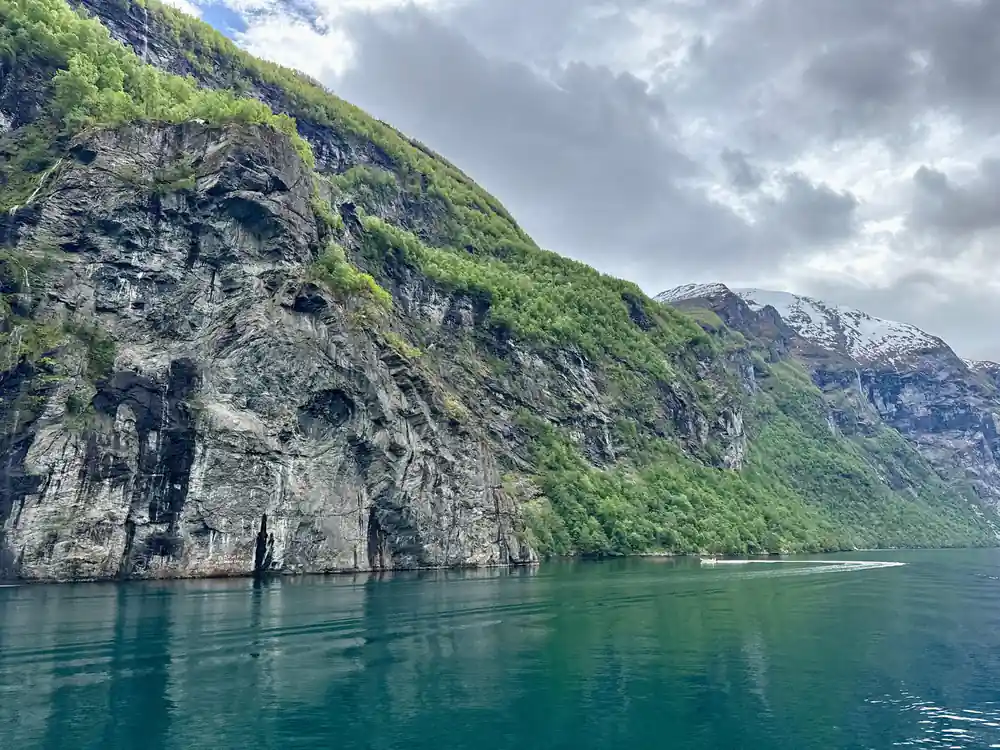
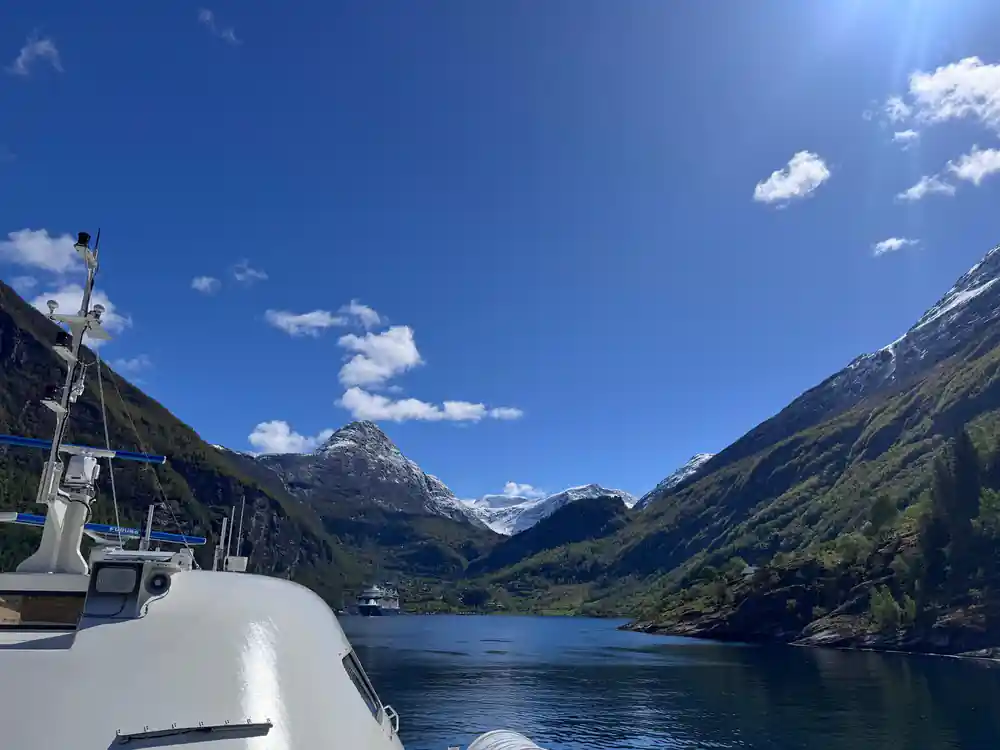
Falling water and deep water: the fjord gives a boat plenty to look at.
Sea eagles nesting on Geirangerfjord cliffs
The white-tailed eagle is the bird most people hope for, and it is hard to mistake once you have seen one. It is heavy and broad-winged, with a pale head and a slow, deliberate flight, and it patrols the cliff faces looking for fish near the surface. Pairs nest on ledges high above the water in places no walker can reach, and you will often see one riding the updraught beside a waterfall, holding position without a single wingbeat. They stay in these fjords through the year, and the cliffs can deliver an eagle on a grey, drizzly day just as easily as on a bright one.
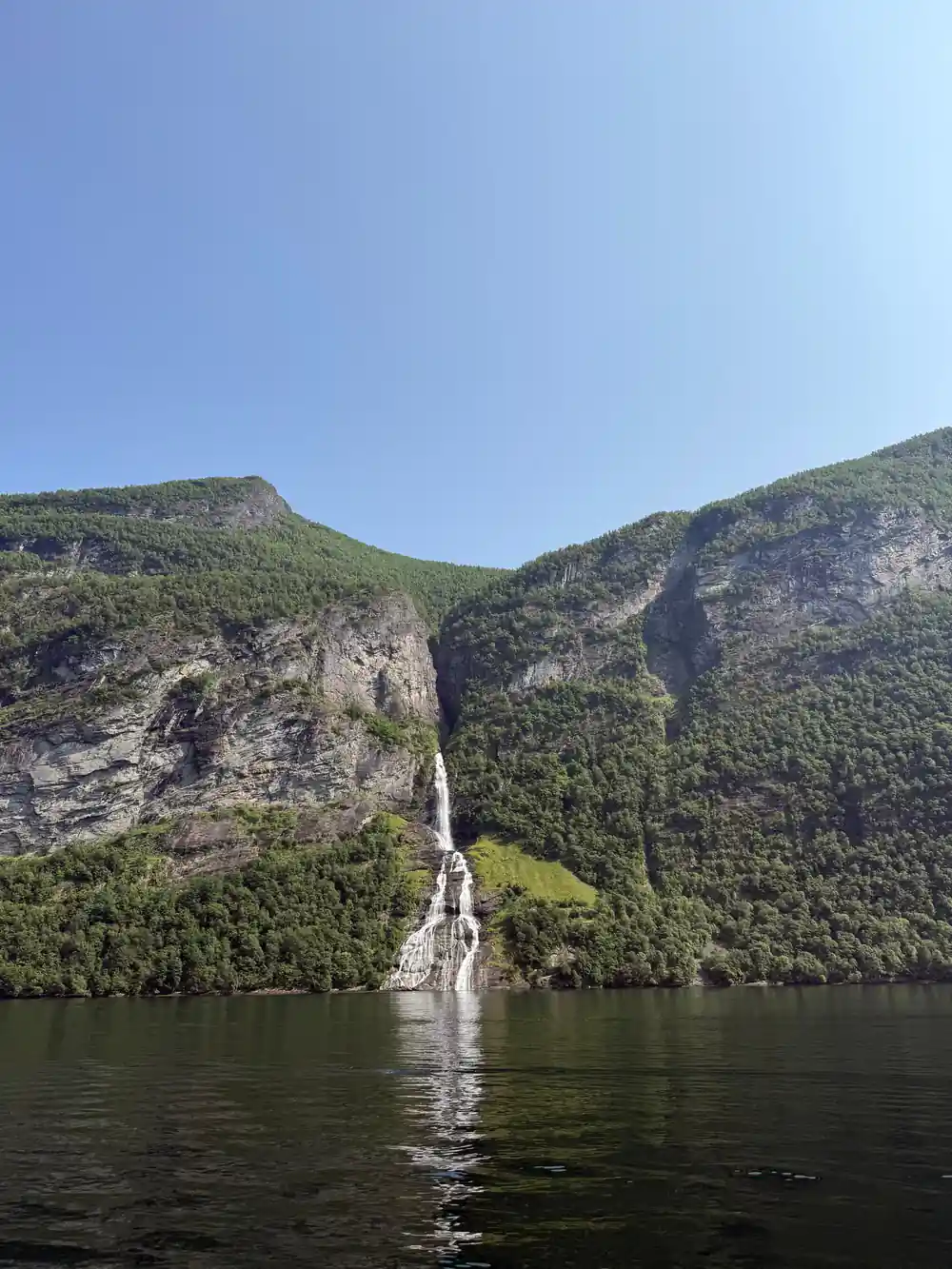
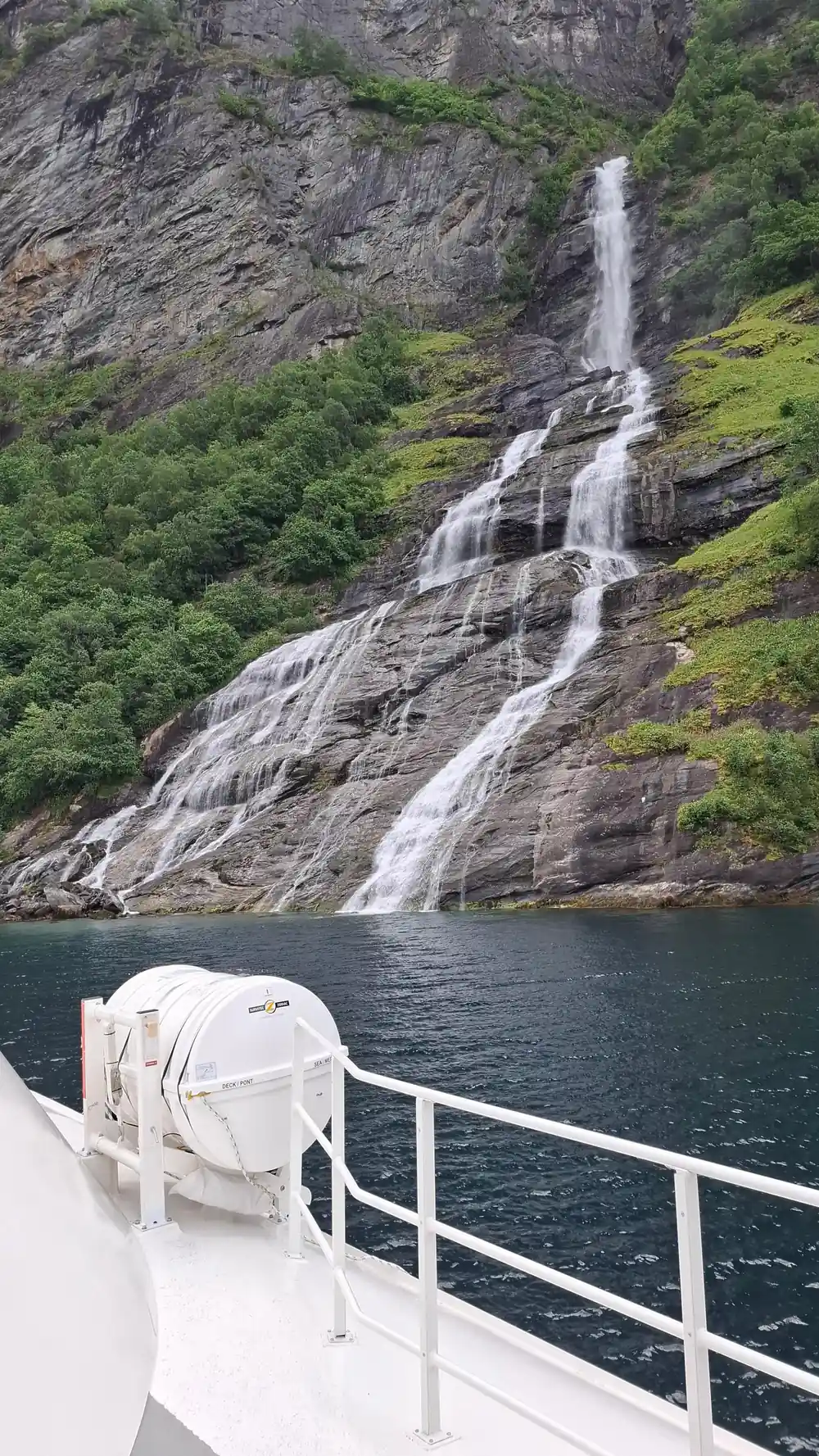
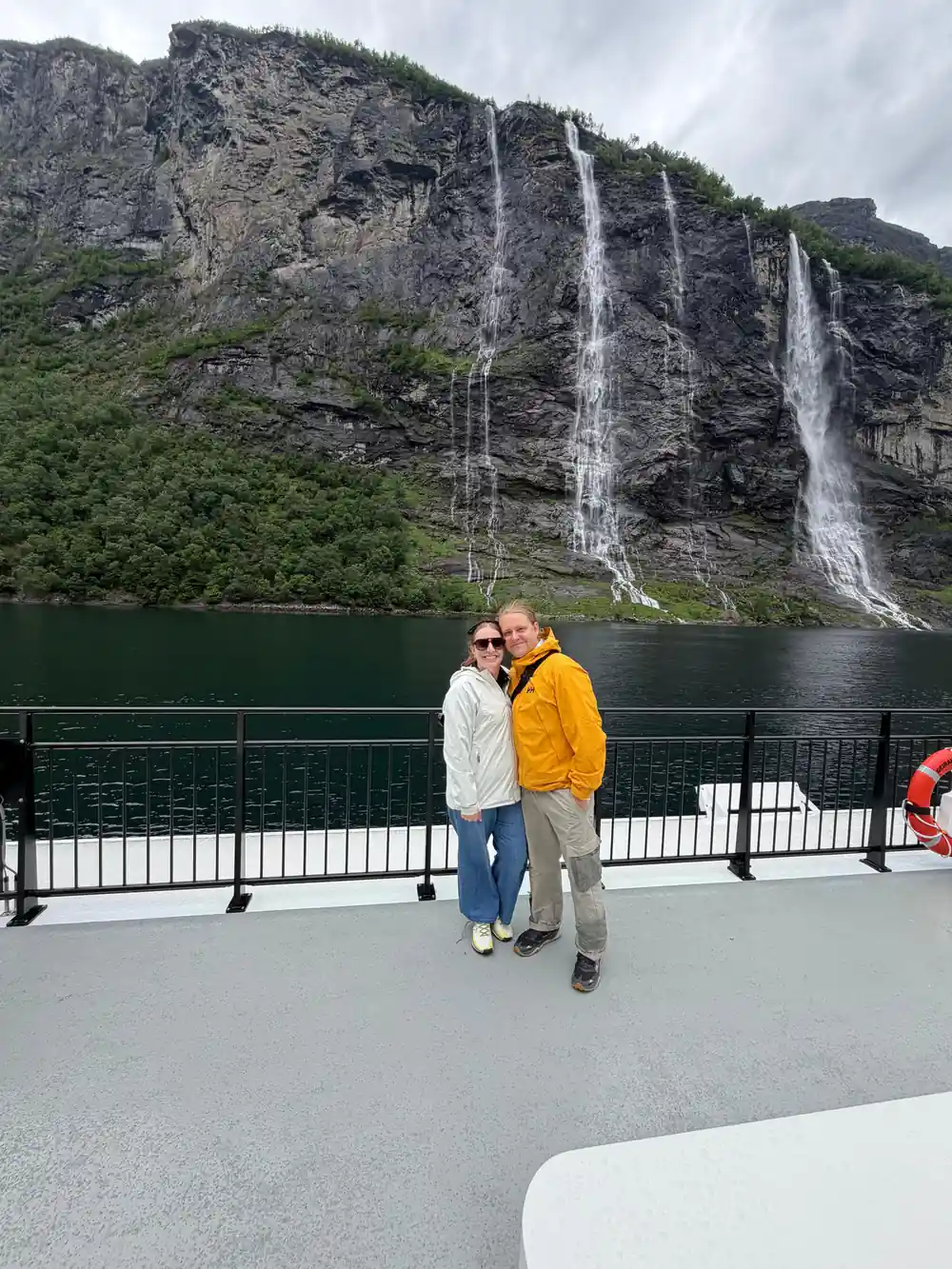
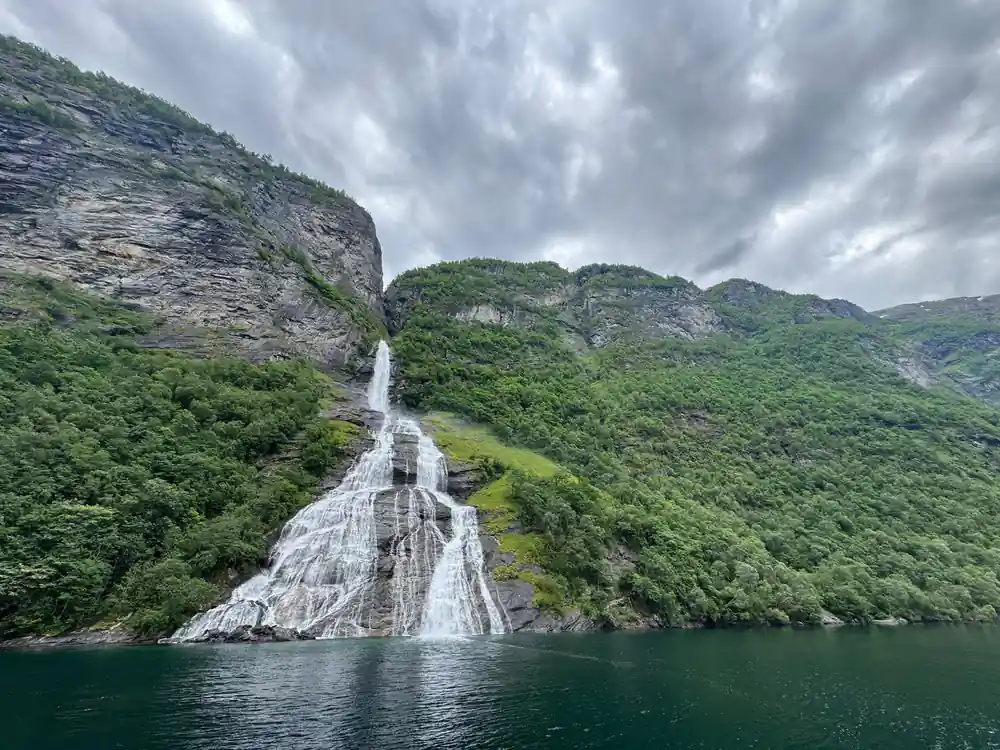
The Seven Sisters waterfall is the classic backdrop for this kind of watching. The waterfall is 410 meters tall in total and the highest of the seven streams has a free fall of 250 meters.[6] From the deck the strands look like ribbons of white against grey rock, and spray drifts across the boat when the wind turns. The round trip calls at the Seven Sisters, at Friaren and at the village of Geiranger.[2] When the boat slows at the falls, put the camera down for a moment, look up at the ledges and let your eyes adjust. That is when the eagle usually appears.
Why freshwater floats on salt in the fjord
Fjord water is layered, and the layers behave in a way that surprises people. Snowmelt and rain pour off the mountains all summer. Fresh water is lighter than salt water, and the meltwater spreads across the surface in a thin, cold sheet instead of mixing straight down. Underneath, the salty water sits in a deep, still basin. The boundary between the two is soft and shifting, pushed around by wind and tide and pulled thinner or thicker by the season. Trail a hand over the side on a calm day and you can sometimes feel the change within a metre of the surface.
So can you swim in Geiranger? People do, usually in summer, from sheltered spots where a shallow shore or a river mouth has taken the edge off the surface. It is a bracing plunge rather than a comfortable swim, and the cold water underneath is never far away. Go in with someone watching, keep it short, and get dry and warm afterwards. A short swim in fjord water is one of the memorable things you can do here, but it is not a beach day in the usual sense, and a warm layer waiting on the shore makes it much better.
from US$202
Ålesund to Geirangerfjord and back on the hybrid electric boat, rated 4.75 from 758 reviews, with an audio guide on board.[2]
The water colour explained by glacial sediment
The colour is the giveaway that glaciers are working somewhere upstream. Ice grinds rock into a very fine powder, and meltwater carries that powder into the fjord, where it hangs suspended instead of settling. The particles scatter light, and the result is the milky green and turquoise you see on bright days. It is strongest near the head of the fjord and near river mouths, where the cloudy water arrives, and softer further out where it has had time to spread and thin. The West Norwegian Fjords, Geirangerfjord and Nærøyfjord, was inscribed on the World Heritage List in 2005.[7]
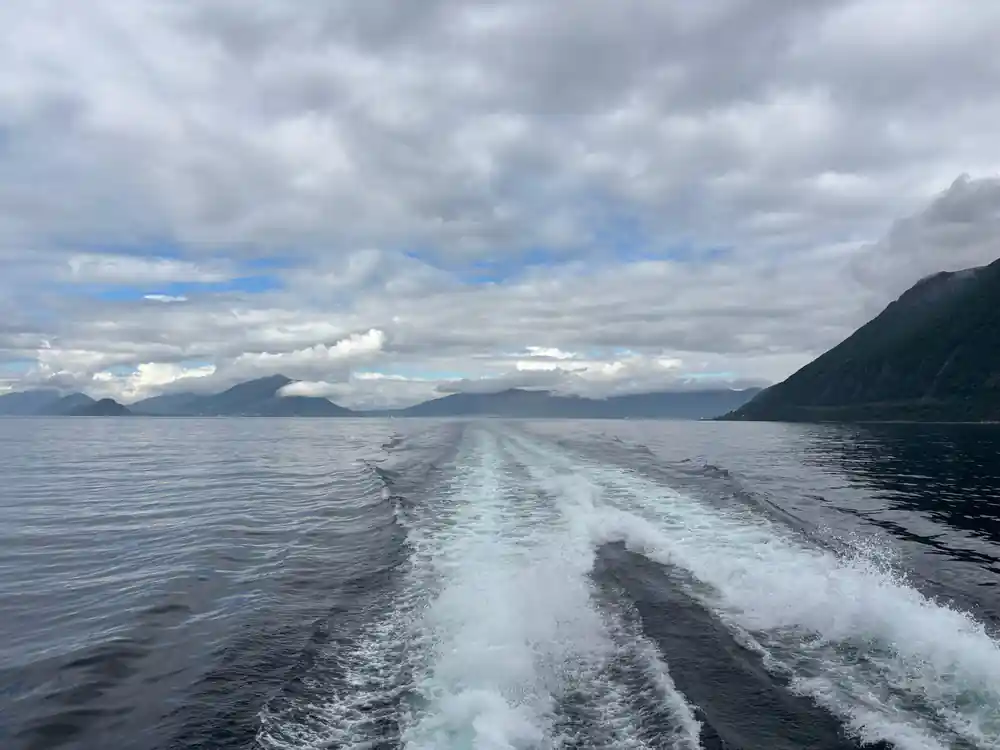
That colour changes hour by hour, which is part of the pleasure of a long crossing. Sun, cloud, wind and rain all shift the tone, from pale jade in bright light to a flat, steely grey under a low sky, and a ripple of wind can turn a mirrored surface into a texture of small waves in minutes. Photographers can expose for the bright water and let the dark cliffs fall away, or point at the cliffs and accept a blown-out white fjord. Either way, look at the water on the way out and again on the way back, because it will not look the same.
Goats and sheep on abandoned mountain ledges
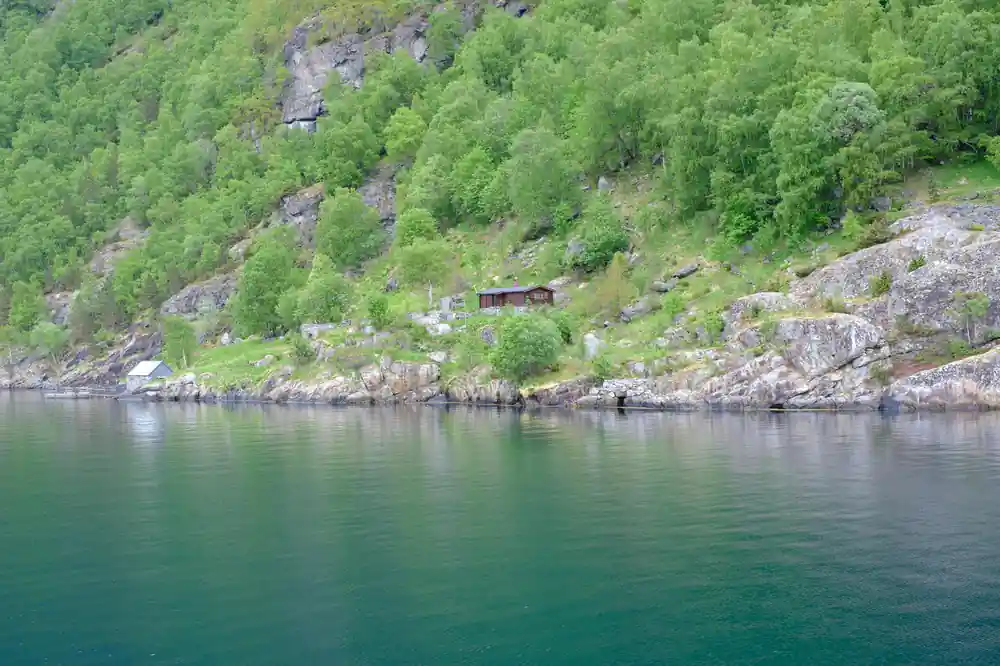
Look up, not only sideways. Small farms cling to green shelves high above the fjord, and in summer goats and sheep graze slopes that look far too steep for anything with hooves. They move in slow lines across the grass, and you may hear bells before you see any animals, a thin metallic sound carrying across the water from a ledge that still looks empty. These are working farms and summer pastures rather than exhibits, so give them space, do not try to reach them from the water, and treat any view of them as a glimpse of an old way of farming that still runs on its own clock.
Getting up to that high ground is a seasonal business. The Norwegian Scenic Route Geiranger-Trollstigen is always closed in winter and normally open from mid-May to October/November, depending on when winter returns.[8] If you are driving, that window is your plan, and if you are on a boat you will see the farms from below, framed against rock and sky. Ask locally about road conditions before setting out, since the same high ground that gives the best view of the fjord is also the first place to catch weather.
Life in the deep fjord basin
People ask how deep Geirangerfjord goes, and the honest answer from the deck is that you cannot see the bottom and you would not want to guess. The walls drop away underwater about as steeply as they rise above it, and the fjord floor lies far down in cold, dark water where sunlight never reaches. The boat crosses that water all day, and almost nobody on board sees more than the surface. It is worth pausing over: a landscape that looks vertical above the waterline continues just as vertical below it.
Down there the community is different. Deep fjord basins hold bottom-dwelling fish, crustaceans and other animals adapted to low light, steady cold and little disturbance, and some Norwegian fjords shelter cold-water corals on their slopes. For a traveller, the practical point is simple. The fjord is a living body of water with layers, currents and seasons, not a painted backdrop, and a quiet electric boat is a good platform for noticing that. Watch the surface for what it tells you about what lies underneath, and let the deep, still part of the fjord be the thing you remember afterwards.
From-prices of fjord cruises from Ålesund
Estimate a fjord day from Ålesund
From-prices per person from GetYourGuide.[2][3][9][10] Both columns show the listing from-price.
Seasons for water and wildlife
Plan the fjord day
Pick your boat
Compare the round trip, the winter sailing and the boat-and-bus route before you book, because the length of the day differs a lot between them.
Dress for water
Layers, a windproof shell and a warm hat beat one heavy coat, since you will move between a heated cabin and an open deck.
Pack for watching
Binoculars, a waterproof camera cover and a strap that keeps your phone off the deck are worth the space they take.
Watch the cliffsides
Eagles, goats and small farms all sit above the waterline, so look up as often as you look out across the fjord.
Keep the day loose
The round trip takes 8.5 to 9.5 hours, so do not book a tight afternoon tour straight afterwards.[2]
Ready for the fjord, the waterfalls and the quiet water?
from US$202Reserve now & pay later