The quick version
- An audio guide is included in Danish, English, French, German, Italian, Japanese, Korean, Norwegian and Spanish, so download it before you board.[1]
- Bring your own wired or over-ear headphones so you can hear the commentary over wind, engine noise and conversation on deck.
- Ålesund averages 2.8 °C in February and 14.8 °C in August, so pack a base layer, a warm mid layer, a windproof shell and waterproof trousers.[2]
- Cold air drains phone batteries fast. Charge everything the night before and carry a power bank for a full day of photos on the water.
- The round trip calls at Geiranger, with the Seven Sisters Waterfall and Friaren on the way, so plan the walk you want in the village.[1]
- Top choice Geirangerfjord Round Trip from US$202 Duration8.5 - 9.5 hours[1]Rating4.75 from 758 reviews[1]GuideAudio guide included[1]CancellationFree cancellation[1] Check availability
- Winter Fjord Cruise from US$325 Duration9 hours[3]Rating4.76 from 105 reviews[3]GuideLive tour guide[3]CancellationFree cancellation[3] See this tour
- Hjørundfjord Round Trip from US$115 Duration5 hours[4]Rating4.58 from 282 reviews[4]GuideLive tour guide[4]CancellationFree cancellation[4] See this tour
The largest number of cruise arrivals occurred in Bergen, with 328, followed by Ålesund with 290.
Pack light, layer up, stay on deck
Pack in your day bag
Download the audio guide before you board
The round trip comes with an audio guide included in Danish, English, French, German, Italian, Japanese, Korean, Norwegian and Spanish.[1] Sort that out the night before, on hotel wifi or at home, rather than standing on a windy deck trying to load an app while the boat is already moving. The listing shows the trip running 8.5 - 9.5 hours, so a slow download at the quay is time you will not get back.[1] Check the volume, check that the player works, and consider downloading the whole thing rather than streaming it.
Read a little about the route, too, so the commentary has something to hang on. The boat runs down Storfjorden and Sunnylvsfjorden, into Geirangerfjord, past the Seven Sisters Waterfall and Friaren, on to Geiranger, and then back the same way.[1] Geirangerfjord is part of the West Norwegian Fjords, inscribed on the World Heritage List in 2005.[5] Knowing the names of the fjords and the waterfalls tells you when to stand up, put your phone away and simply watch.
The audio guide on this trip covers Danish, English, French, German, Italian, Japanese, Korean, Norwegian and Spanish.[1] If you are travelling with people who prefer different languages, agree before you board who is listening to what, so nobody is swapping earpieces in the middle of the best stretch of fjord. A laminated card or a note on your phone with the day's timetable helps too, especially if you are the one keeping an eye on the clock for the group.
Bring your own headphones
The earpieces handed out on board rarely suit everyone, and this is the one piece of kit people most often wish they had packed. Your own headphones make the commentary easy to follow when the engine is running, the wind is blowing and the passengers around you are talking. A simple wired pair is the safest choice, because it works the moment you plug it in and needs no charging. Bluetooth headphones are fine as well, but pairing them in a busy lounge while the boat is casting off is more fiddly than most people expect.
If you use hearing aids, or you know from experience that small in-ear buds fall out of your ears, bring what you normally wear on a long journey. A short extension cable or a splitter is a cheap way for two people to share one socket, and a soft case keeps cable and buds together in the day bag. Test the headphones before you leave home, then keep them in the top pocket of your jacket, where you can reach them without unpacking everything else.
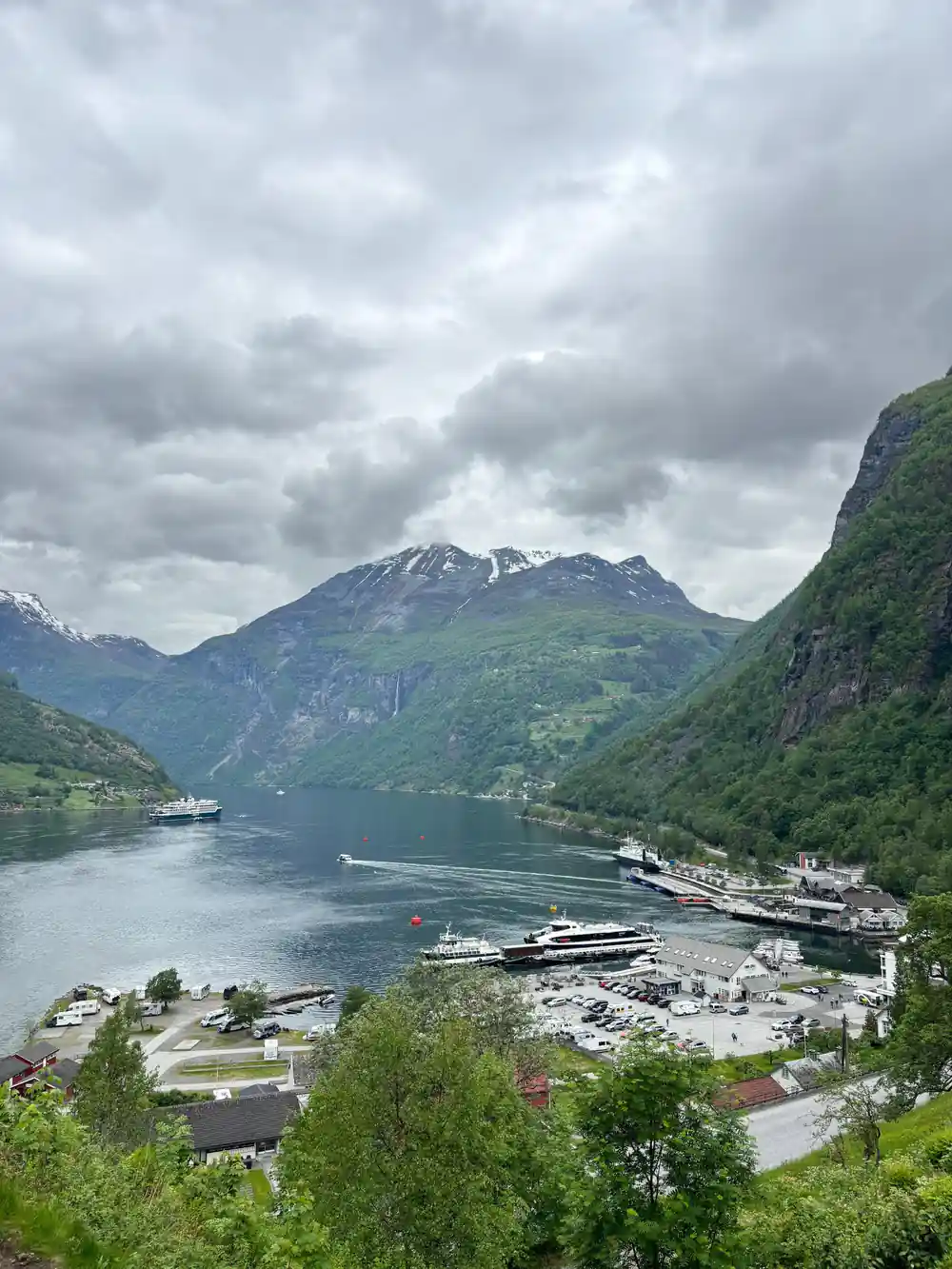
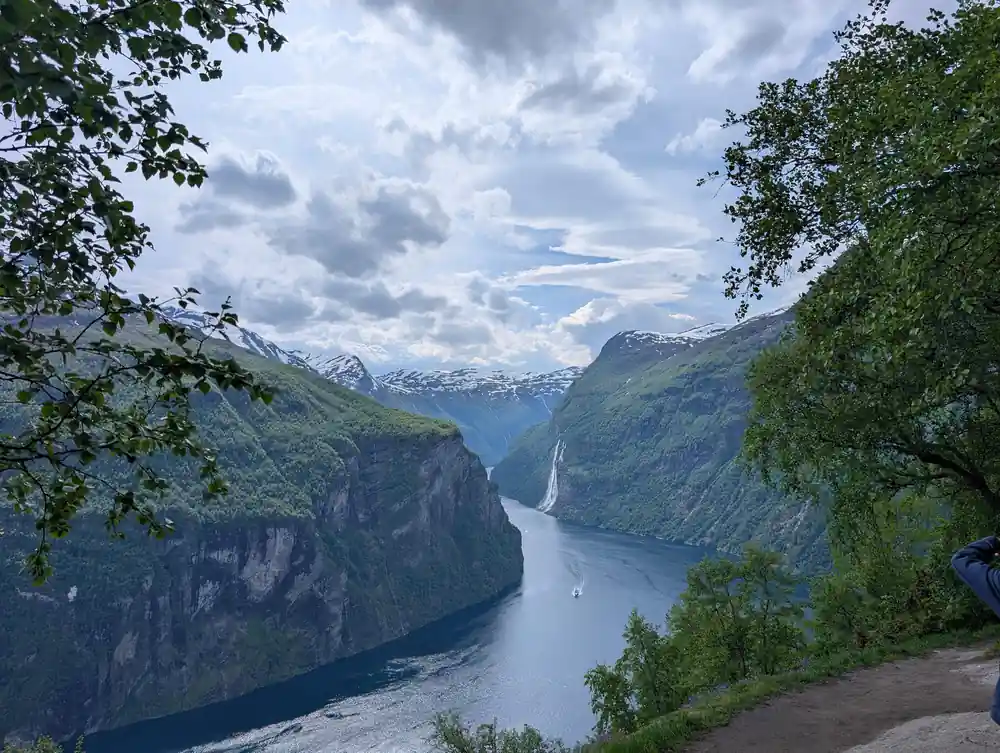
The Seven Sisters falling into the deep water of Geirangerfjord
What to bring: Geiranger cruise
If you are wondering what to wear on a Scandinavian cruise, treat this as the short answer: layers, and more of them than you think you need. In Ålesund the average temperature is 2.8 °C in February and 14.8 °C in August.[2] A boat moving through a fjord feels colder than the town does, and spray adds a chill of its own. Start with a base layer that wicks, add a warm mid layer such as fleece or wool, and finish with a windproof, water-resistant shell you can open when the sun comes out.
Waterproof trousers over ordinary trousers are worth the space in your bag, especially if you plan to be on deck near the waterfalls. The Seven Sisters is 410 meters tall in total, and the highest of the seven streams has a free fall of 250 meters.[6] Shoes with grip matter more than shoes that look good, because decks get wet and metal steps get slick. A hat and a thin pair of gloves earn their place even in midsummer, when the wind on open water is much cooler than the street you left behind in Ålesund.
Manage your phone battery in the cold
Cold air shortens battery life, and a long day of photographs, video and audio guide use will empty a phone that normally lasts until bedtime. Charge the phone, the camera and the power bank the night before you travel, and take the charger with you in case you find a socket on board or in a cafe. Carry the power bank in an inside pocket where your body heat keeps it working, and keep a short charging cable with it so you are not hunting for one at the wrong moment.
Keep the phone you are using warm by holding it close to your body between shots. Turn the screen brightness down, close the apps you are not using, and switch on airplane mode in the stretches where there is no signal anyway. If you shoot a lot of video, take the photographs you really want early in the day and then let the battery rest. A small zip bag protects a spare battery or a phone from spray when the deck gets wet.
Earphones, a power bank and a phone are small things, but over a long day they are the difference between a comfortable trip and a frustrating one. Pack them in the same pocket every time, so a missing item is obvious straight away. And remember that the boat itself offers warm shelter when the cold wins: step inside, warm your hands, and go back out when the light changes. The fjord is not going anywhere.
from US$202
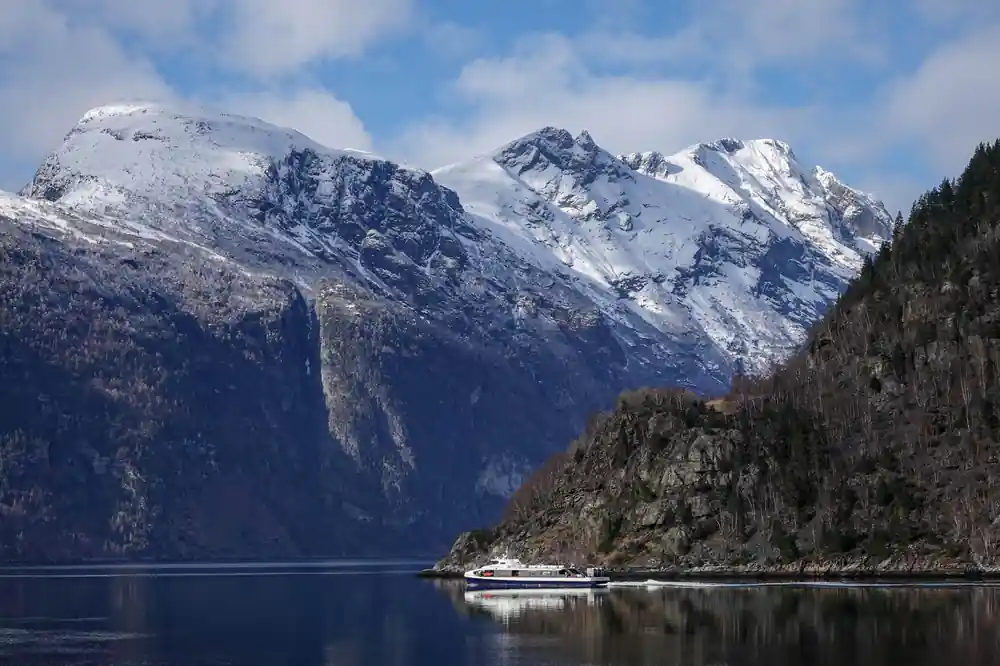
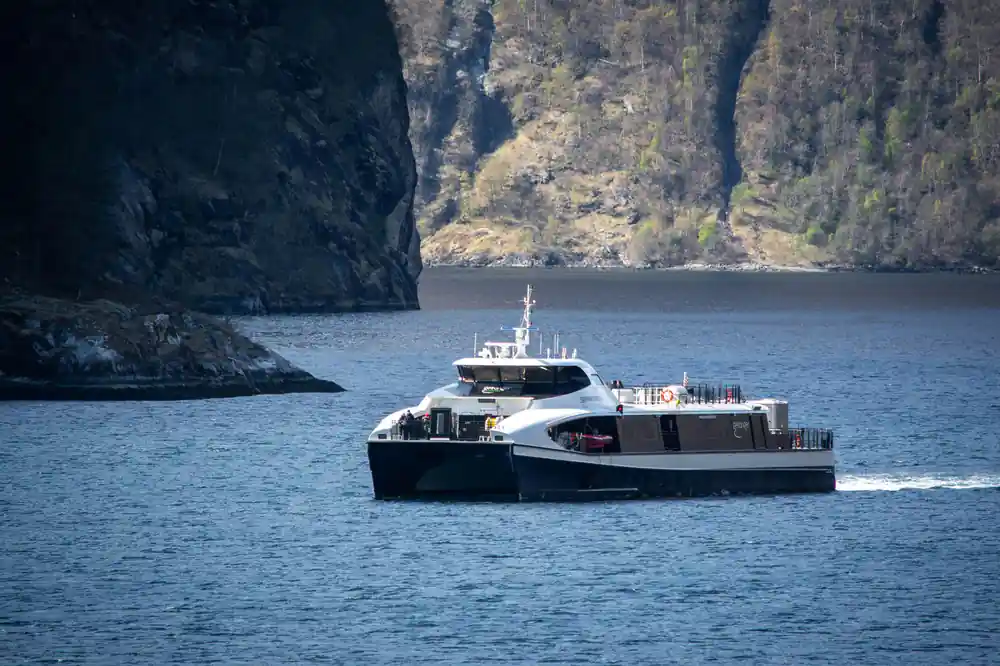
The Ålesund to Geirangerfjord round trip by hybrid electric boat runs 8.5 - 9.5 hours and includes an audio guide.[1]
Pack sun protection and rain gear
Fjord weather changes quickly, and both halves of this list can be needed on the same afternoon. Pack high-factor sun cream, lip balm and sunglasses for the bright hours on the water, when sunlight bouncing off the fjord is stronger than it feels on your skin. Then pack a hooded rain jacket that folds small, and check before you travel that it still keeps water out. A jacket that has stopped repelling rain is worth replacing before a long day outdoors.
A light neck gaiter or scarf is useful against wind and spray, and a thin pair of gloves is welcome in the morning and evening. A dry bag, or a couple of large zip bags, protects a camera, a phone and a paper ticket. If you burn easily, a wide-brimmed hat is easier to manage than reapplying cream on a moving boat. None of this needs to be expensive or bulky, and most of it fits in a small day bag that stays with you on deck.
Prepare for your free time in Geiranger
The round trip includes a stop in Geiranger, which is the stretch of the day when you are on your own two feet rather than on the water.[1] The village is small and easy to walk, with the fjord and the boats always in view. Ask the crew how long you have ashore, note the meeting point, and set an alarm on your phone rather than trusting your sense of time. It is easy to wander further than you meant to when the view keeps improving around every corner.
By road the distance from Ålesund to Geiranger is 67 miles (108 km).[7] Take what you need for the whole day when you step off in the morning, because you will be ashore and then back on the water. Souvenir shops, bakeries and cafes cluster near the waterfront, and the walk along the water takes only a few minutes at an easy pace. Keep your rain jacket with you, and check where you are expected to be if the return leg of your day is by bus rather than boat.
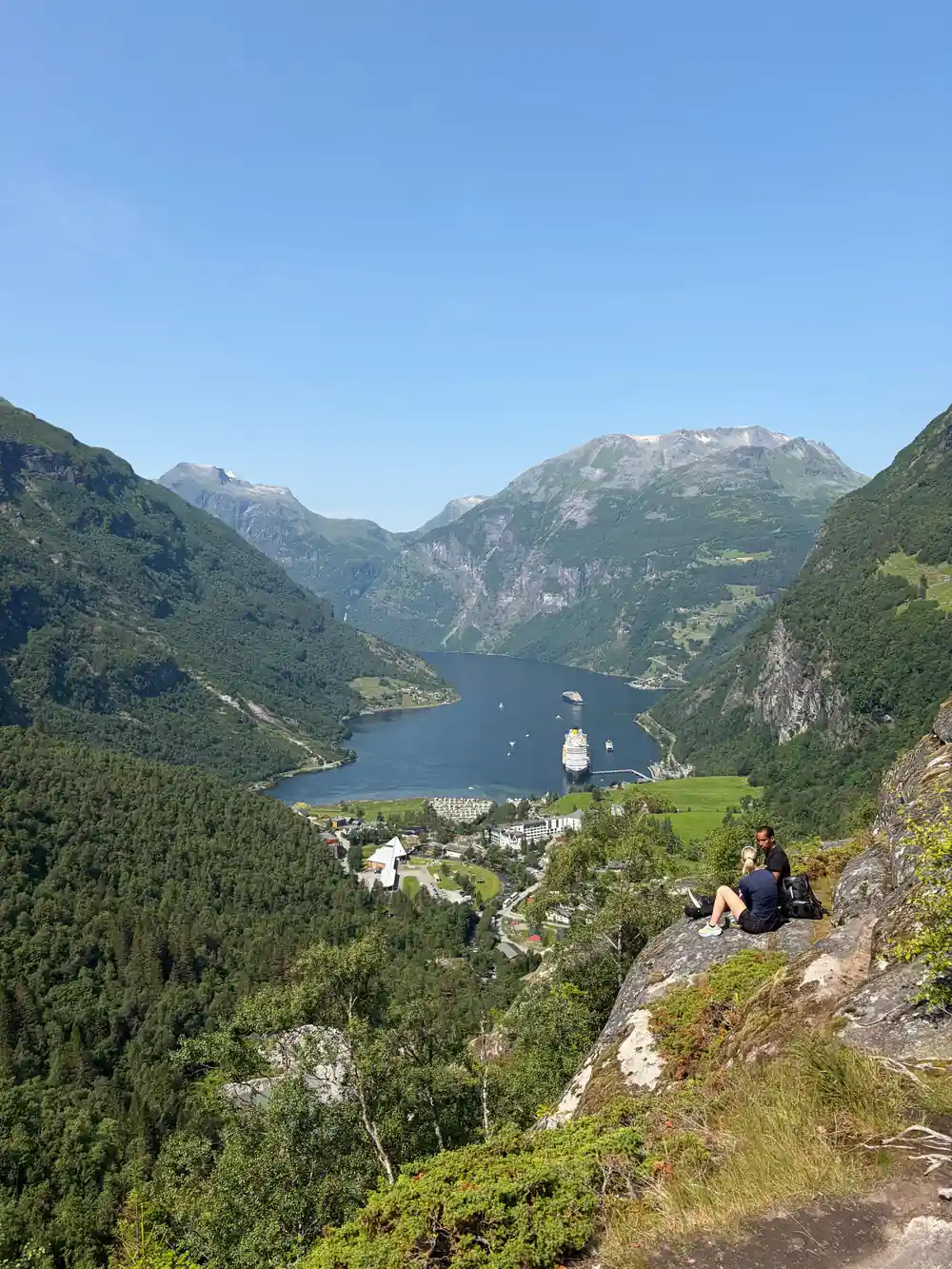
If you would rather see the village from above, there are short walks and viewpoints within reach on foot, with a wide view back along the fjord as the reward. Keep an eye on the clock, keep your group together, and aim to be at the meeting point a few minutes early rather than exactly on time. Buying one extra coffee while you wait is a much cheaper mistake than watching your boat pull away without you.
Check signal and navigation before departure
Signal comes and goes in the deep fjords, and an audio guide that needs to stream will not cope when the connection drops. Download offline maps and any commentary files while you still have a strong connection, ideally at home or on your first evening in Norway. Save your booking confirmation, your ticket and the meeting point offline as well, and take screenshots of anything you would hate to lose. Paper works too, and it never runs out of battery on a cold deck.
In Ålesund the cruise dock sits right in the town, a 2 minute walk from the cruise port into the city.[8] If you have a spare half day before or after your fjord trip, the Airport Express Bus (Flybussen FB65) runs between the terminal and Ålesund sentrum in roughly 15 to 25 minutes, and there is a Hop On-Hop Off bus with commentary in eight languages.[9][10] For the fjord day itself, charge everything in the evening, lay out your layers, and put the headphones, the power bank and your ticket in one place so the morning stays calm.
From-prices of fjord days from Ålesund
Every value is the from-price in US dollars shown on these GetYourGuide listings:[1],[3],[4] and[11].
Compare from-prices in US dollars
From-prices are US dollar amounts from GetYourGuide listings[1],[3],[4] and[11].
When to go on a fjord day from Ålesund
Prepare for the fjord day
Book and download
Reserve the round trip, then download the audio guide and any offline maps while you still have good wifi.[1]
Charge the kit
Phone, camera, power bank and headphones, all charged the night before, with a spare cable in the bag.
Dress for the deck
Base layer, warm mid layer, windproof shell, waterproof trousers, hat and gloves. Ålesund averages 2.8 °C in February and 14.8 °C in August.[2]
Pack the day bag
Sunglasses, sun cream, a dry bag, your own headphones and a little patience for weather that changes fast.
Plan Geiranger time
The round trip calls at Geiranger, so agree a meeting point and set an alarm before you step ashore.[1]
See Geirangerfjord from the water on the hybrid electric boat
from US$202Reserve now & pay later