The quick version
- A round trip from Ålesund through Storfjorden, Sunnylvsfjorden and Geirangerfjord to the village of Geiranger.[1]
- The Seven Sisters is 410 meters tall in total, and the highest of its seven streams has a free fall of 250 meters.[2]
- The hybrid electric round trip runs 8.5 - 9.5 hours and includes a stop in Geiranger before the return leg.[1]
- From US$202, with reserve now and pay later, and free cancellation up to 24 hours in advance for a full refund.[1]
- Rules and local restrictions can change, so read the current Norwegian drone regulations before you travel and ask your operator on the day.
- Top choice Geirangerfjord Round Trip from US$202 Duration8.5 - 9.5 hours[1]Rating4.75 from 758 reviews[1]Guide and audioAudio guide included[1]HighlightsSeven Sisters and Friaren[1]CancellationCancel up to 24 hours ahead[1] Check availability
- Winter Fjord Cruise from US$325 Duration9 hours[3]Rating4.76 from 105 reviews[3]Guide and audioAudio guide and live guide[3]HighlightsWinter sailing to the fjordCancellationCancel up to 24 hours ahead[3] See this tour
- Boat and Bus Tour from US$210 Duration10.5 hours[4]Rating4.60 from 140 reviews[4]Guide and audioHost or greeter: English[4]HighlightsStop at Ørnesvingen[4]CancellationCancel up to 24 hours ahead[4] See this tour
Discover charming Alesund and listen to fun and informative commentary in any of the eight languages offered on our Hop On-Hop Off bus.
Is this the right boat for photographers?
On deck
- A polarising filter cuts glare on the water, though you may need to turn it for the sky
- A microfibre cloth and a rain cover for spray on the open deck
- A warm layer, a windproof shell and gloves, even in summer
- February averages 2.8 °C and August 14.8 °C, so pack for the month you sail.[5]
Deck position for the Seven Sisters and Friaren
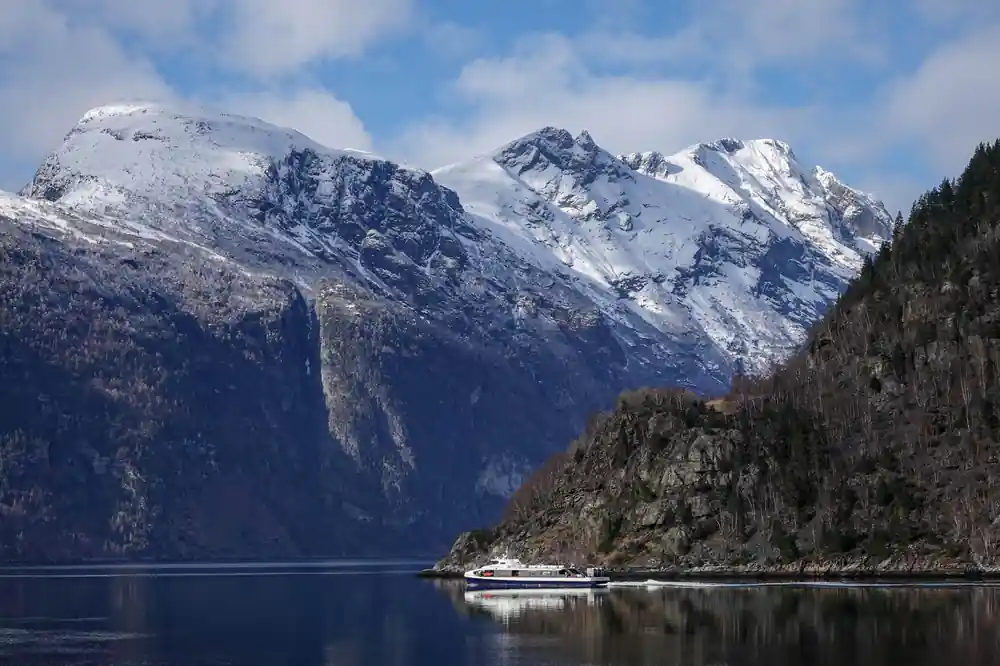
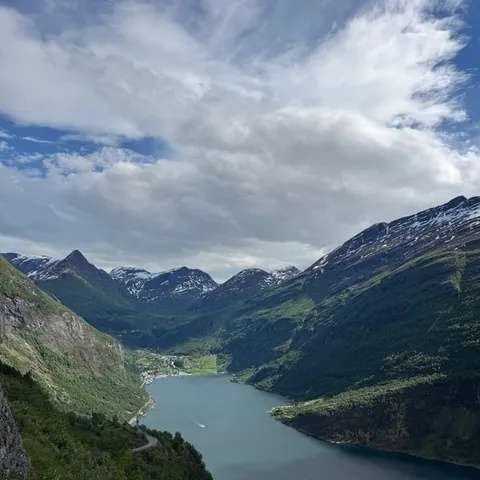
The round trip leaves Ålesund and threads through Storfjorden, Sunnylvsfjorden and Geirangerfjord before it reaches the village of Geiranger, then turns and comes back down the same water.[1] Because it returns the way it came, every cliff gets a second pass, so if the light is wrong or someone steps in front of you on the way in, there is another chance on the way out. The distance from Ålesund to Geiranger is 67 miles (108 km), and the boat covers it at a pace that lets you watch the walls rise around you rather than blur past.[6] Get the camera out and the cloth handy early, because the good frames start well before the famous waterfalls.
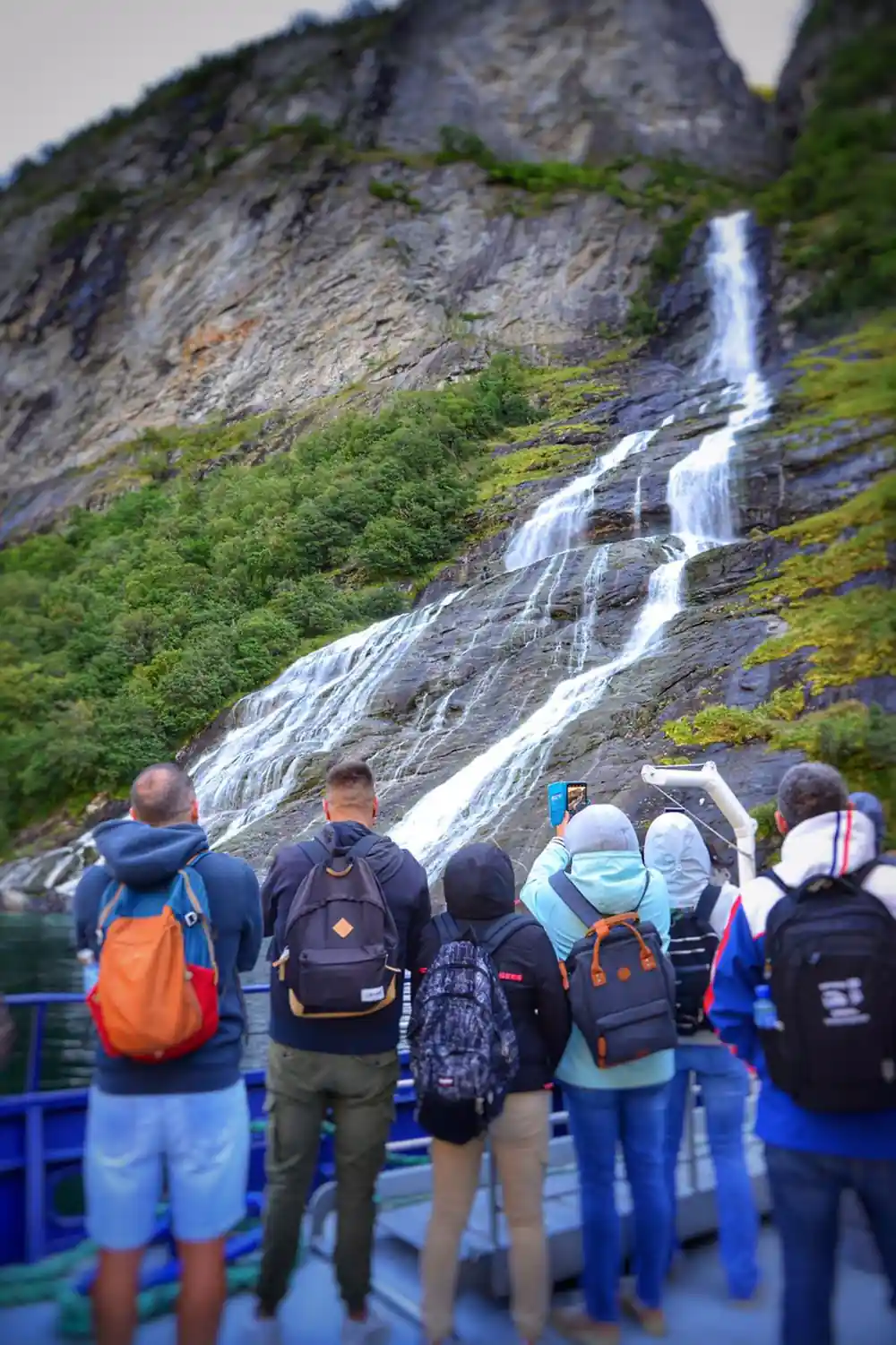
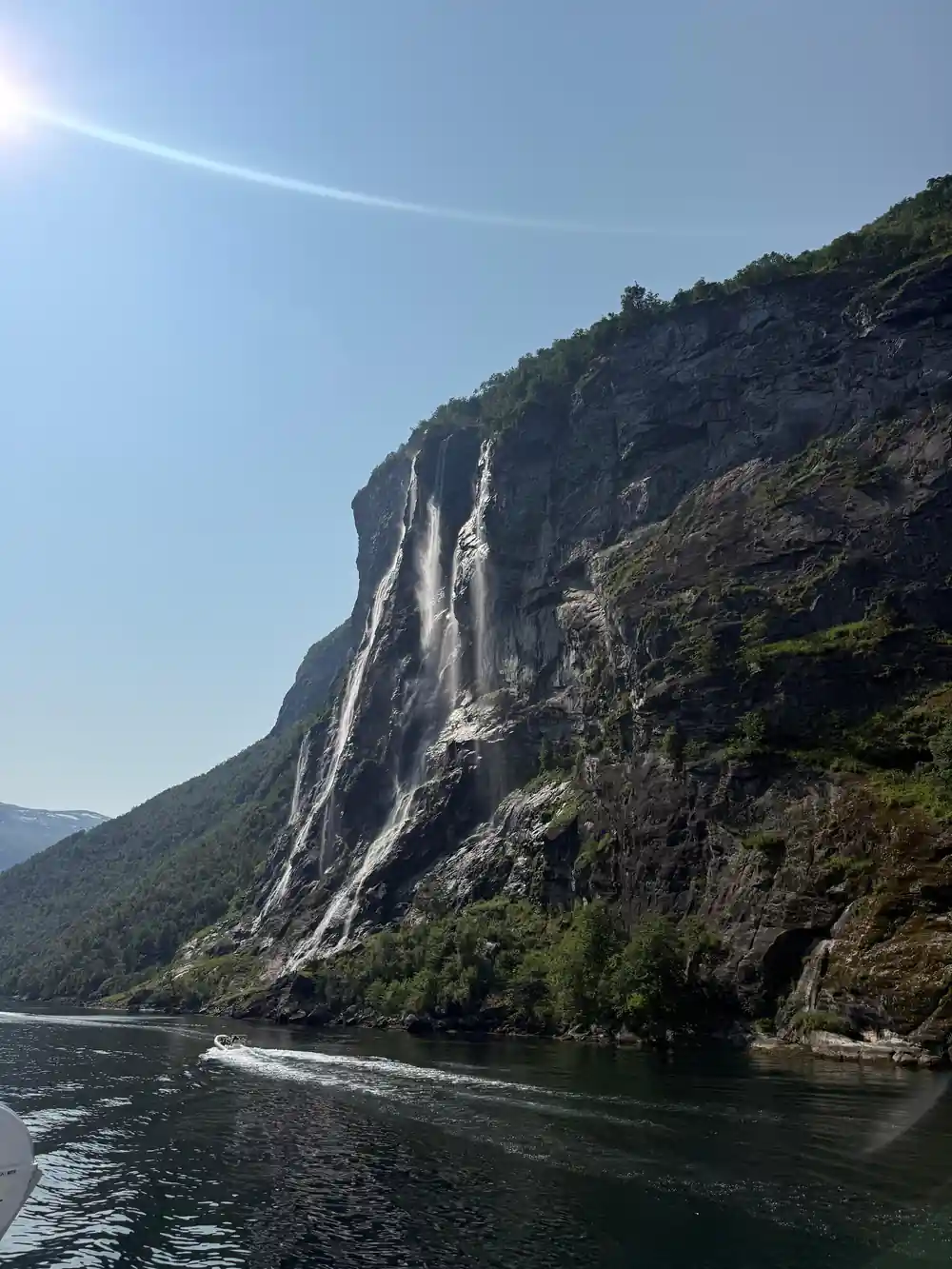
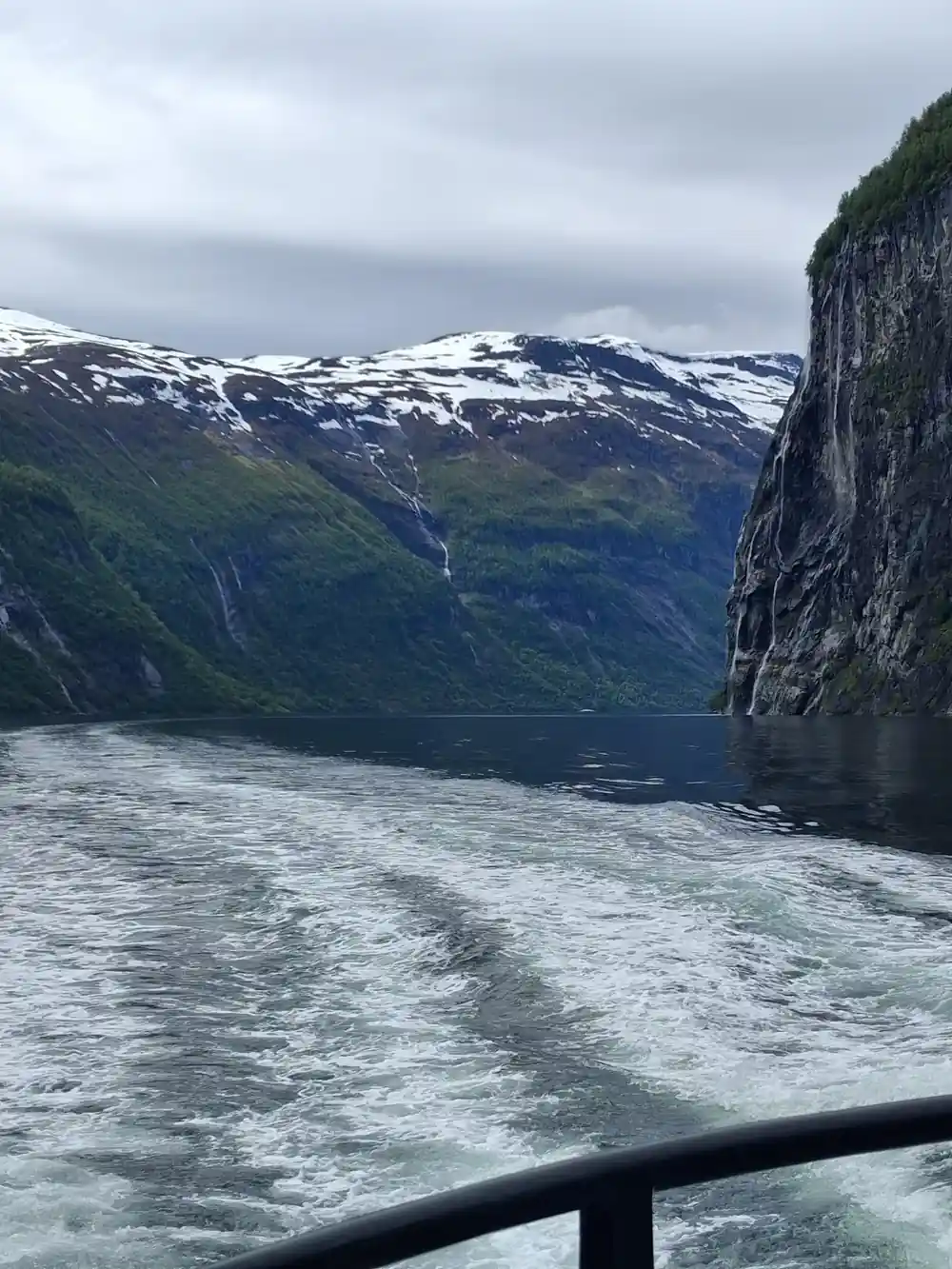
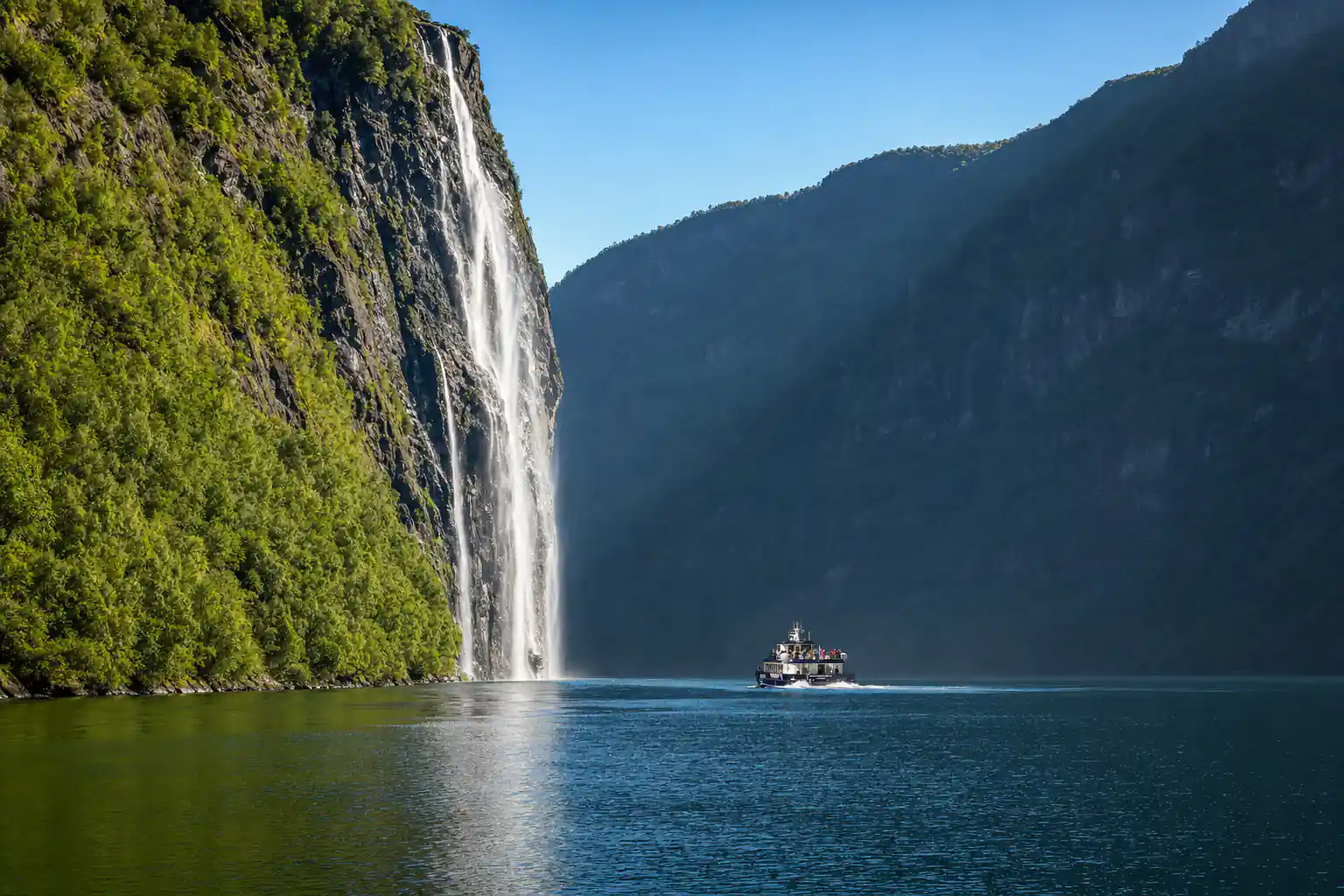
The two set pieces are the Seven Sisters and Friaren, both on the route before the boat reaches Geiranger.[1] The Seven Sisters is 410 meters tall in total, and the highest of its seven streams has a free fall of 250 meters, so a wide or normal lens frames the whole fall better than a long telephoto that catches only a slice.[2] Watch which side the crew and the other photographers drift towards, and move a minute early, before the rail fills. A place at the bow gives a clean line at both walls, while a seat on the highest open deck gives you a view over heads and a little shelter from the wind.
Managing spray, glare and water reflections
Water is the whole subject here, and it plays two tricks on a camera: spray on the front element and glare off the surface. On an open deck, fine mist from the bow wash settles on the lens within minutes and turns a bright waterfall into a soft smear. Keep a microfibre cloth in a zipped pocket, wipe before the important frames rather than after, and accept that a small rain cover earns its place in the bag on a grey day. A blower or a soft brush helps with salt that dries into a film, and a clear filter is easier to clean than a front element, so leave one on if you have it.
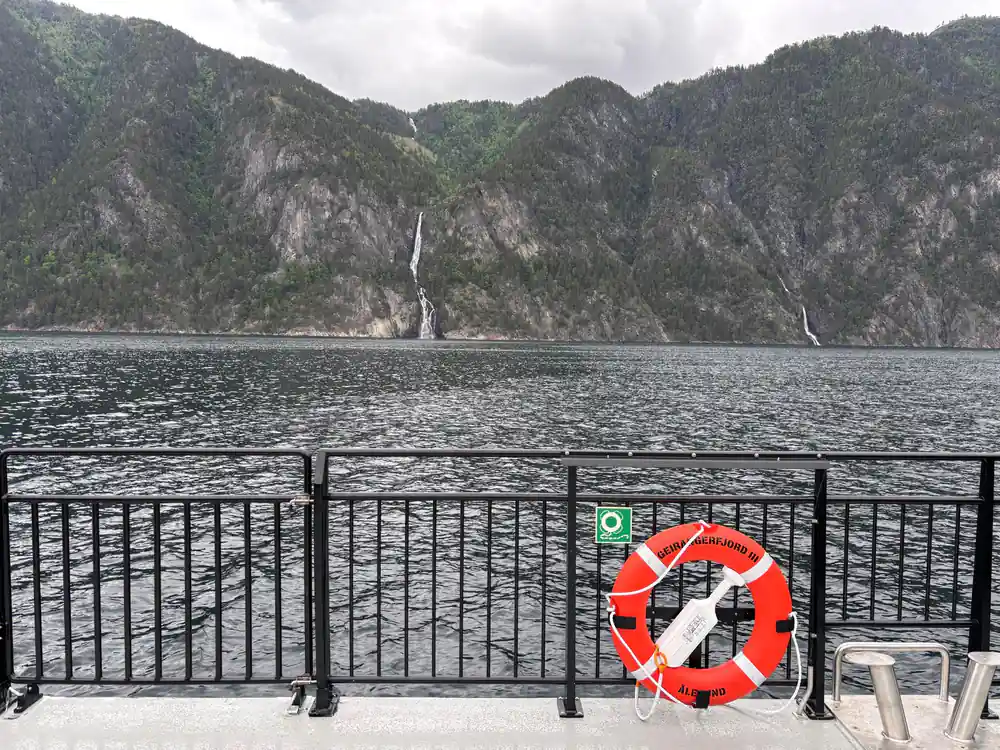
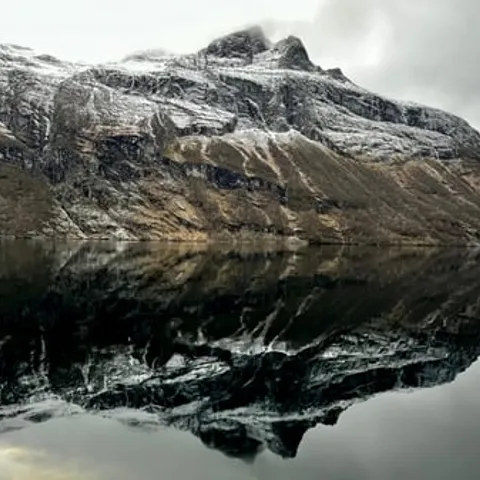
Reflections need a different fix. A polarising filter cuts the sheen on the water, but on a wide fjord view you have to choose: turn it for the water and the sky can go flat, so check the frame each time you turn the ring. Inside the cabin, glass adds its own reflection, so shoot from the open deck when you can. If you must stay in, press the lens close to the window, shade the glass with your hand and angle away from the cabin lights. Wooden rails and white superstructure also bounce light, so keep the front of the lens shaded with your hand or a hood.
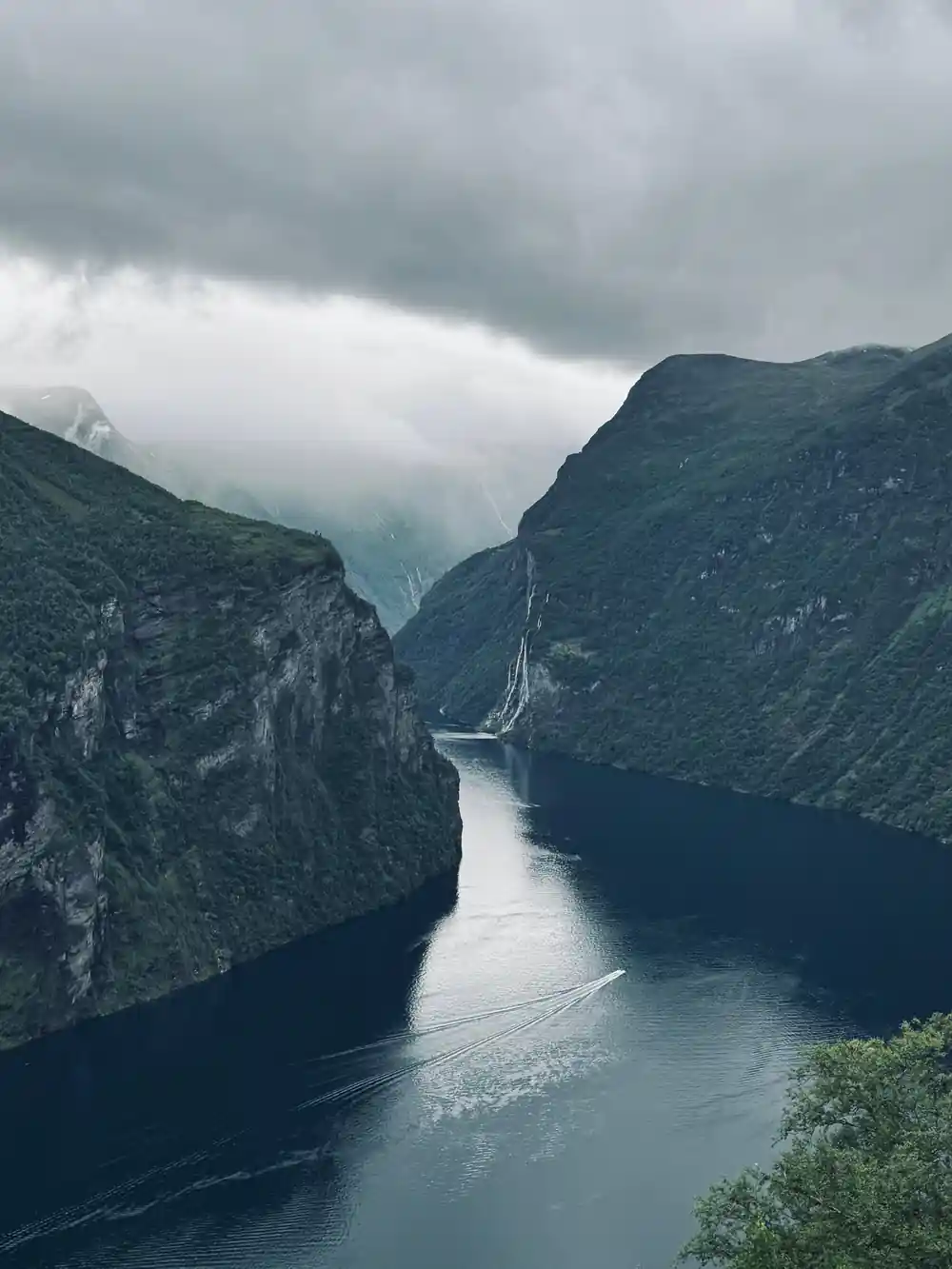
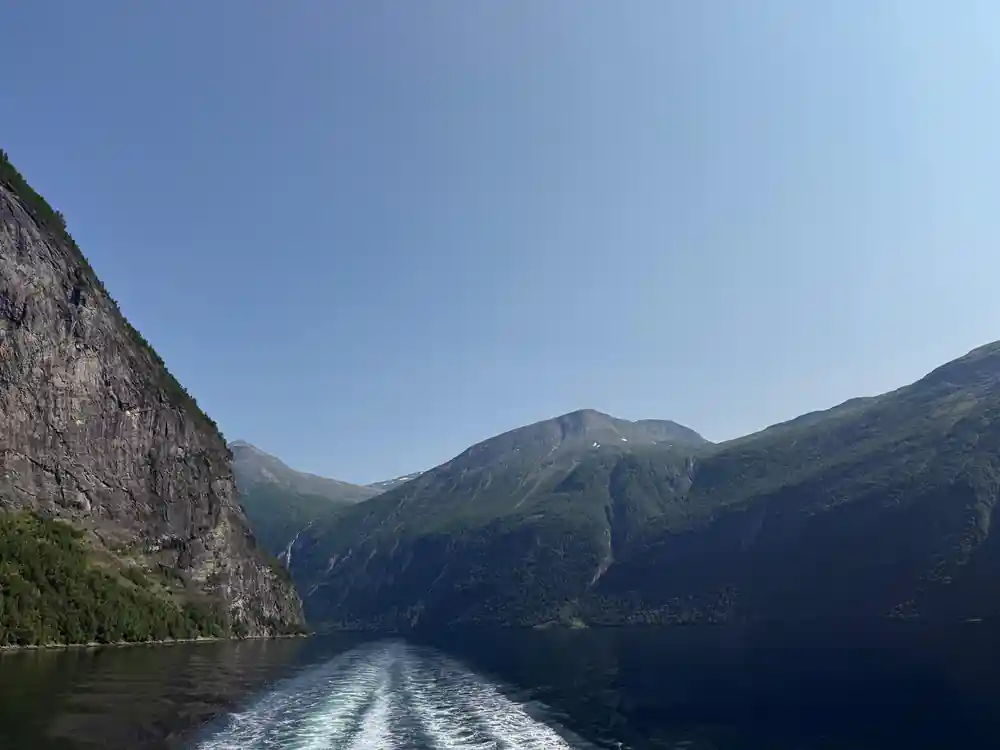
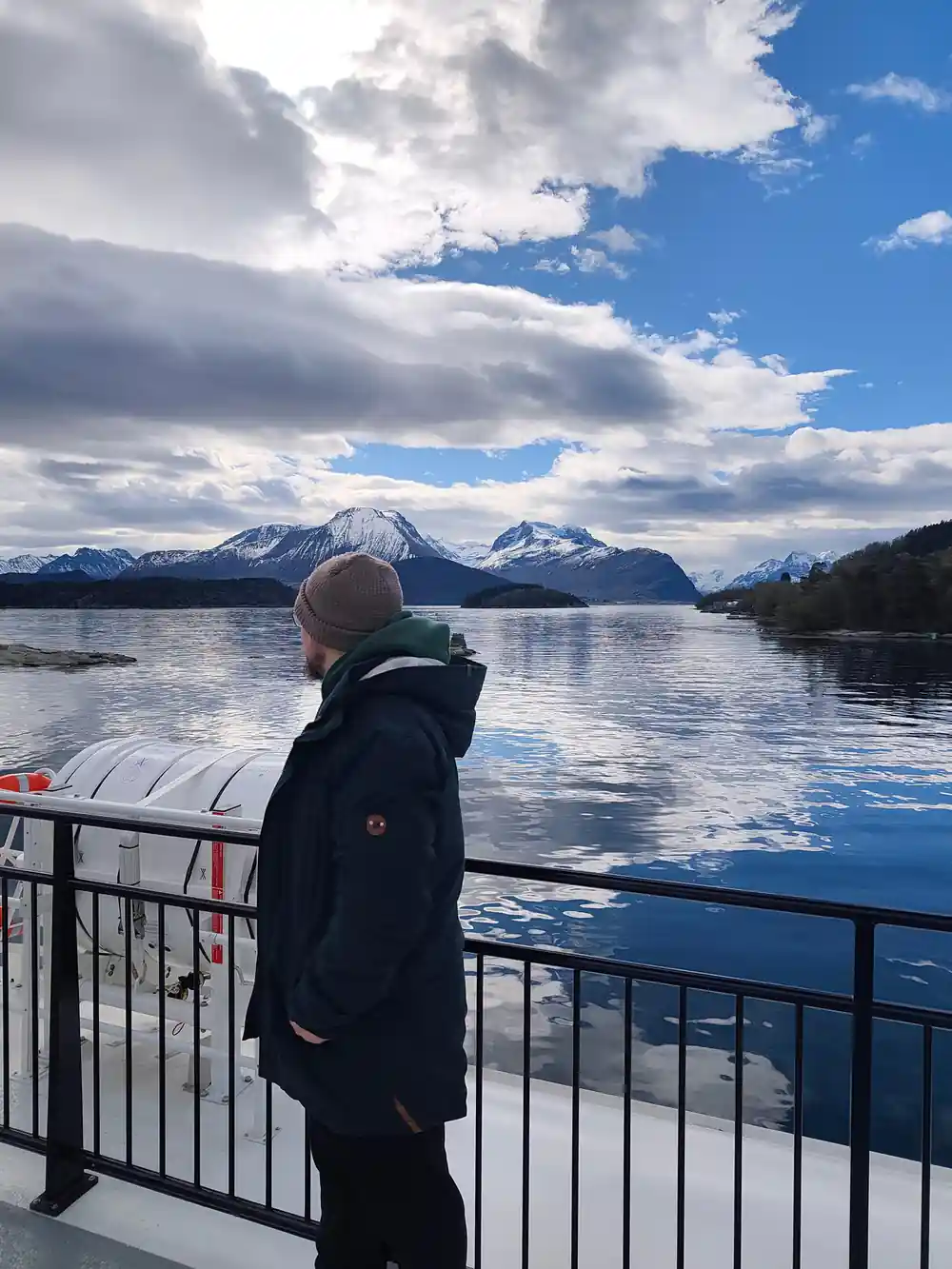
Cloud shadow sliding across the fjord wall, shot from the open deck.
Drone checks over the fjord
The West Norwegian Fjords, which include Geirangerfjord, were inscribed on the World Heritage List in 2005.[7] That status is worth knowing before you plan any flight over the water. Norwegian drone rules and any local restrictions can change, and they vary with where you launch and what is below you, so read the current regulations yourself before you travel and ask your operator what is allowed on the day. A camera held over the rail will not replace an aerial shot, but it keeps you flying nothing while you check.
If you do fly, launch from land rather than from a moving deck, keep the aircraft in sight and watch the people around you. Cold air shortens battery life, and wind funnels down these valleys without much warning, so a spare battery kept warm in an inside pocket is worth the weight. For most trips the drone is a bonus for a shore day rather than a tool for the boat, where the crew have their own view of what is safe and courteous. Ask before you unpack anything.
Phone camera or dedicated camera on a moving boat
For most people, a phone is enough. Fjord views are wide, the light is often soft and the boat keeps moving, so the fast, stabilised, always ready camera in your pocket beats a heavy bag you have to open with wet hands. Modern phones handle the scale of the walls well, and their automatic HDR does a decent job of holding bright water and dark rock in the same frame. Shoot wide for the walls, then pinch in for the falls, and keep one frame with the boat or the rail in it to give the cliffs some scale.
A dedicated camera still wins at waterfalls. A larger sensor holds more detail in white spray and lets you drag the shutter for a smoother fall of water, though you will want a solid brace or a rail clamp on a moving deck. Bring one body and one zoom, or one body and a wide lens, and leave the rest in the cabin. Changing lenses in salt spray is the quickest way to spoil a day of shooting, and a spare card in a dry pocket costs nothing. Batteries last longer in a warm pocket than in a cold bag.
from US$202
The Ålesund to Geirangerfjord round trip runs 8.5 - 9.5 hours on a hybrid electric boat and passes the Seven Sisters and Friaren.[1]
Keeping your phone charged all day
This is a long day out. The round trip runs 8.5 - 9.5 hours, and filming, live viewing and a bright screen drain a phone far faster than ordinary use.[1] Carry a power bank with enough capacity for two full charges and top it up the night before, because sockets on board are not something to count on. Cold is the other thief: a phone that lives in an outside pocket can drop a bar or two before you notice, and the same goes for camera batteries.
A few habits stretch a battery through the fjord. Put the phone in airplane mode where the signal is weak, since a handset hunting for a mast is a big drain. Turn the screen brightness down, switch off live photos and background sync, and stop the camera app from recording in its highest resolution unless you need it. Keep the phone in an inside pocket between shots, and use the stop in Geiranger to swap in the power bank while the boat is still.
Light on the fjord by time of day
Starting times vary by date, so check the listing for the sailing you want rather than assuming a fixed departure.[1] The fjord walls rise steeply on both sides, and the boat sits in shadow or in full sun depending on the hour. Early and late light rakes across the rock and picks out the ridges, while the middle of the day flattens everything into bright, contrasty haze. Cloud moving across the valley changes the exposure from one minute to the next, so meter again after every turn.
Cloud is not the enemy here. An overcast sky works as a giant softbox, with no blown highlights and no hard shadows cutting across the water, which suits waterfalls well. If the sun does come out, shoot with it behind you where you can, expose for the bright water and let the cliffs fall dark, and save backlit frames for the moments when spray glows in the light. When the boat turns, the light on a waterfall can switch from front to back in seconds, so be ready to change your exposure.
How seasons recolour the same frame
Average temperatures in Ålesund run from 2.8 °C in February to 14.8 °C in August, so the same frame changes character across the year, from bare grey rock and snow dusted walls to green slopes and heavy meltwater.[5] Spring meltwater feeds the falls and they run heavy, while late summer often leaves a calmer, greyer fjord and a softer haze. Autumn colour on the lower slopes arrives before the first snow, and the low sun sits in the frame for longer.
Winter is its own trip. A winter cruise to Geirangerfjord runs 9 hours and starts from US$325, with an audio guide and a live guide.[3] Aurora is visible in Ålesund during moderate to strong geomagnetic activity, with the best viewing season from late September to late March.[8] On land, the Geiranger-Trollstigen Scenic Route is always closed in winter and normally open from mid-May to October or November.[9] For a Geiranger overlook rather than a deck shot, the boat and bus tour stops at Ørnesvingen above the village.[4]
From-prices for fjord boat tours out of Ålesund
From-prices for one adult on five GetYourGuide listings out of Ålesund:[1],[10],[11],[4],[3].
What a fjord boat trip from Ålesund costs
From-prices per adult from these GetYourGuide listings:[1],[3],[4],[10],[11]. Child rates are not shown for these listings.
When to plan your fjord photography
Shooting from the deck
Scout both rails
Walk the deck before the boat reaches the fjord and note which side has space, wind shelter and a clear view over the rail.
Set up before the turn
Waterfalls arrive quickly. Have your wide lens on, your exposure set and your phone unlocked well before the crew slow the boat.
Expose for the white
Waterfall spray is bright. Meter for the water, let the dark rock fall where it wants, and lift the shadows later at home.
Clean and cover
Spray and salt settle fast. Wipe the lens, keep a cloth in a zipped pocket and cover the camera between shots.
Brace and level
On a moving deck, brace against the rail or a post, and check the horizon in the frame before you press the shutter.
Sail the Geirangerfjord round trip and shoot it from the water
from US$202Reserve now & pay later